Growing Winter Squash in a Short Season: Best Types and Timing
Winter squash is a classic short-season gamble: big vines, long days to maturity and fruit that has to ripen before the first frost. Choose the right type, give it a warm start and it pays off with squash that keeps for months.
The short answer
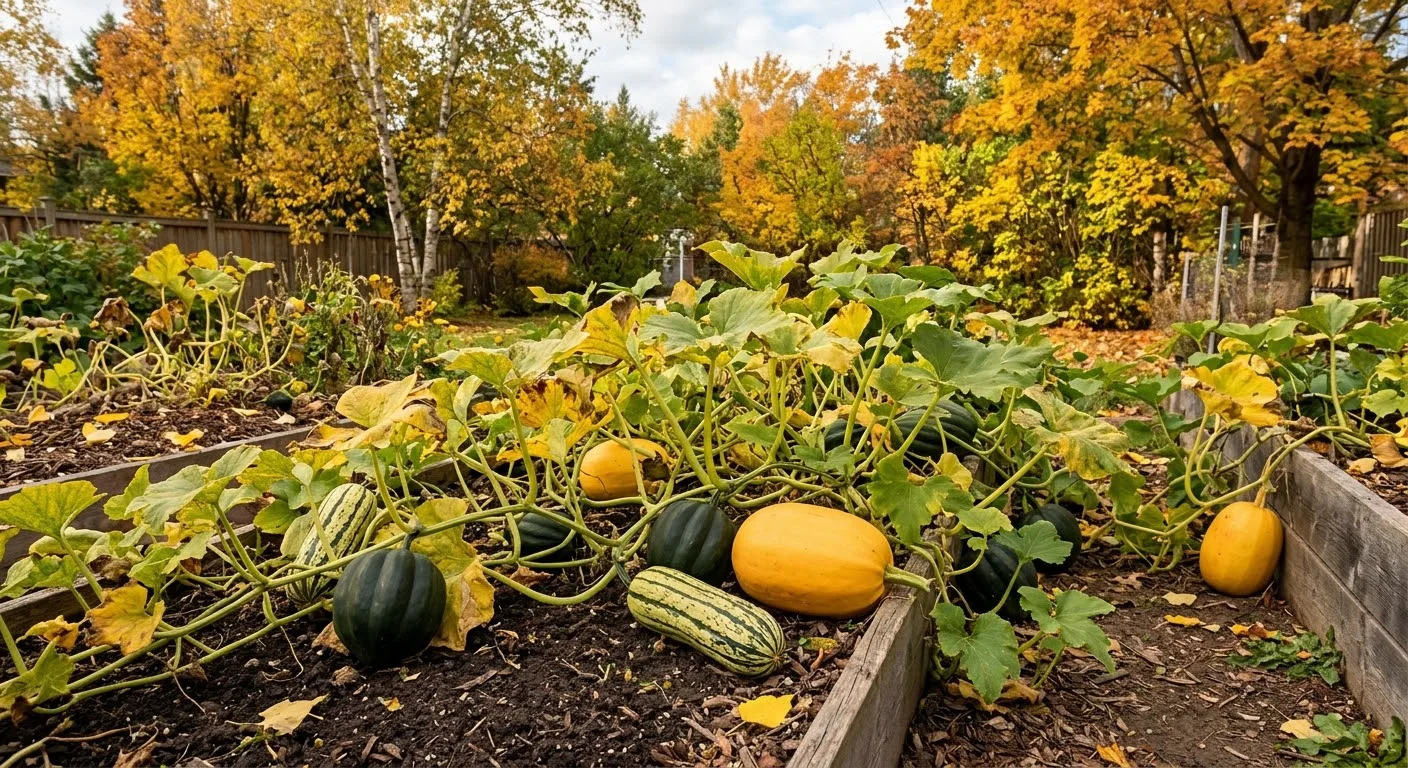
- Pick early types: acorn, delicata and spaghetti squash mature fastest. Butternut and hubbard need the longest season.
- Start seeds indoors 2 to 3 weeks before planting out, and transplant at 10 to 14 days old.
- Plant out about 2 weeks after your average last frost, once days and nights stay above 18°C and the soil is at least 18°C.
- For transplants, choose varieties that mature in 100 days or less; for direct seeding, 80 days or less.
Guidance in this article comes from the University of Saskatchewan winter squash guide.
Which winter squash ripen in a short season
| Type | Season length | Varieties recommended for prairie climates (NDSU, via USask) |
|---|---|---|
| Acorn | Early | Autumn Delight, Black Bellota, Carnival, Table Ace, Table King |
| Delicata | Early | Cornell’s Bush Delicata, Zeppelin |
| Spaghetti | Early | (choose a variety under 100 days) |
| Buttercup and kabocha | Later | Bonbon, Burgess, Sunshine, Sweet Mama |
| Butternut and hubbard | Longest | Butter Baby, Early Butternut, Red Kuri |
Overall, winter squash needs roughly 85 to 115 days depending on type, so the variety you pick matters more than any trick. For small spaces, bush types such as Cornell’s Bush Delicata or Butterbush also grow well in large containers.
Start indoors, but not too early
Squash grows fast and hates root disturbance, so the indoor head start is short:
- Sow 2 seeds 1 cm deep per pot and thin to the strongest seedling.
- Seeds sprout in 5 to 6 days at about 24°C; a heat mat helps.
- Give at least 14 hours of light a day.
- Plant out at 10 to 14 days old, with one or two true leaves. Older transplants suffer more shock.
- Harden off for at least 3 days in a sheltered spot first.
For Saskatoon, with a planting-out date around May 13, USask suggests starting seeds around May 7 and planting out in late May or early June. In the far north, such as Wollaston Lake, it is closer to June 1 for sowing and June 20 for planting out. For the basics of indoor sowing, see our guide to starting seeds indoors.
Planting out
- Warm the bed first: cover it with clear plastic for 2 weeks before planting.
- Space transplants 25 cm apart in rows 90 cm apart, or give direct-sown hills 90 to 120 cm.
- Water in with a high-phosphorus starter fertilizer.
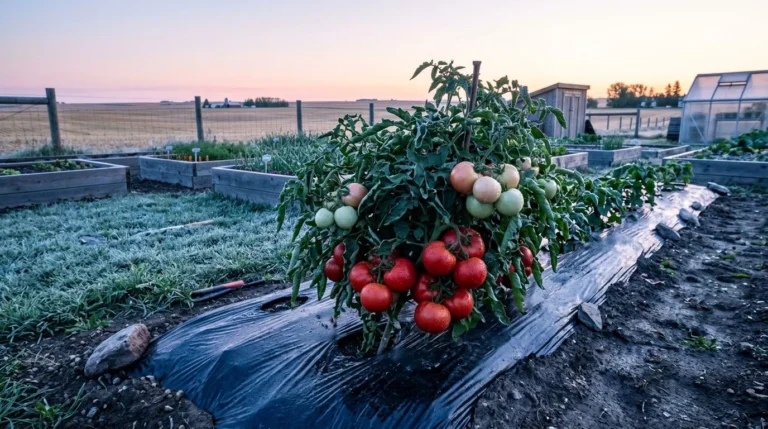
- Use black plastic mulch, row covers or low clear tunnels to keep plants warm, and a cutworm collar pushed 5 cm into the soil where cutworms are a problem.
Pollination matters
Male flowers come first; female flowers, with a tiny squash at the base, follow 7 to 10 days later. Remove row covers as soon as flowers appear so bees can reach them. In cold, cloudy weather, hand-pollinate early in the morning by brushing pollen from a male flower onto the female flowers.
Water and feed
- About 2.5 cm of water a week early on, rising to 2.5 cm twice a week by mid-July.
- A balanced soluble fertilizer weekly before fruit set and twice a week after.
Harvest before the hard frost
Leave squash on the vine as long as you safely can. Plants die at 0°C, but mature fruit tolerates about −2 to −3°C, so a light frost that kills the leaves is a signal to harvest, not a disaster. Cut with pruners and leave at least 3 cm of stem to prevent rot at the stem end.
Storage
Store whole squash in a moderately warm, dry place at about 10°C. Unlike root vegetables, winter squash does not want a cold, humid root cellar. Stored well, it keeps for months.
Curing winter squash
Most winter squash keeps longer if it is cured for one to two weeks at about 27°C in a warm, airy spot after harvest. Curing hardens the skin and heals small nicks. Acorn squash is the exception: it does not benefit from curing and keeps best if moved straight to cool, dry storage. Delicata also has a thinner skin and is best eaten within a couple of months.
How long each type keeps
| Type | Approximate storage life |
|---|---|
| Delicata, acorn | 1 to 3 months |
| Spaghetti | 2 to 3 months |
| Buttercup, kabocha | 3 to 5 months |
| Butternut, hubbard | 4 to 6 months or more |
Eat the short keepers first and save butternut and hubbard for late winter.
Common problems
- Female flowers falling off: usually poor pollination in cool or wet weather. Hand-pollinate in the morning.
- Striped cucumber beetles: they chew seedlings and spread bacterial wilt. Keep row covers on until flowering and check young plants daily.
- Powdery mildew: white patches on leaves in late summer. Give plants space for air flow and water at the base; late-season mildew rarely ruins the crop.
- Fruit not ripening: too many fruit or too late a variety. Pinch off new flowers and small fruit from mid-August so the plant ripens what it has.
Squeezing more out of a short season
- Pinch out the growing tips of long vines in mid-August to push energy into existing fruit.
- Set fruit on a board or straw to keep it off cold, wet soil.
- Plant beside a south-facing wall or fence for extra heat.
- Choose bush or semi-bush varieties for raised beds, where soil warms faster.
Planning next season? Save this guide to your Pinterest board so it is there when you need it.
Gear that helps
- Biodegradable seed starting pots: Squash, pumpkins and cucumbers dislike root disturbance. Plant the whole pot.
- Black plastic mulch film: Warms the soil and holds moisture for heat-loving crops such as squash, cucumbers and tomatoes.
- Soaker hose: Waters the soil, not the leaves, which helps prevent disease and wastes less water.
As an Amazon Associate, Short Season Grower earns from qualifying purchases. Links open Amazon search results so you can compare brands, sizes and prices.
Keep reading
Frequently Asked Questions
What winter squash grows fastest?
Acorn, delicata and spaghetti squash are the earliest types. Butternut and hubbard need the longest season.
When should I plant squash outside?
About two weeks after your average last frost, once day and night temperatures stay above 18°C and the soil is at least 18°C.
Can squash handle frost?
The plants die at 0°C, but mature fruit tolerates about −2 to −3°C. Harvest before a hard frost.
How do you store winter squash?
Whole, in a moderately warm, dry place at about 10°C. It keeps for months.
Should I cure acorn squash?
No. Most winter squash benefits from one to two weeks of curing at about 27°C, but acorn squash keeps best if moved straight into cool, dry storage.
Why are my squash flowers falling off without fruit?
Early flowers are often male and drop naturally. If female flowers with small fruit drop, pollination failed, usually in cool or wet weather. Hand-pollinate in the morning.