Growing Pumpkins on the Prairies and Other Short-Season Gardens
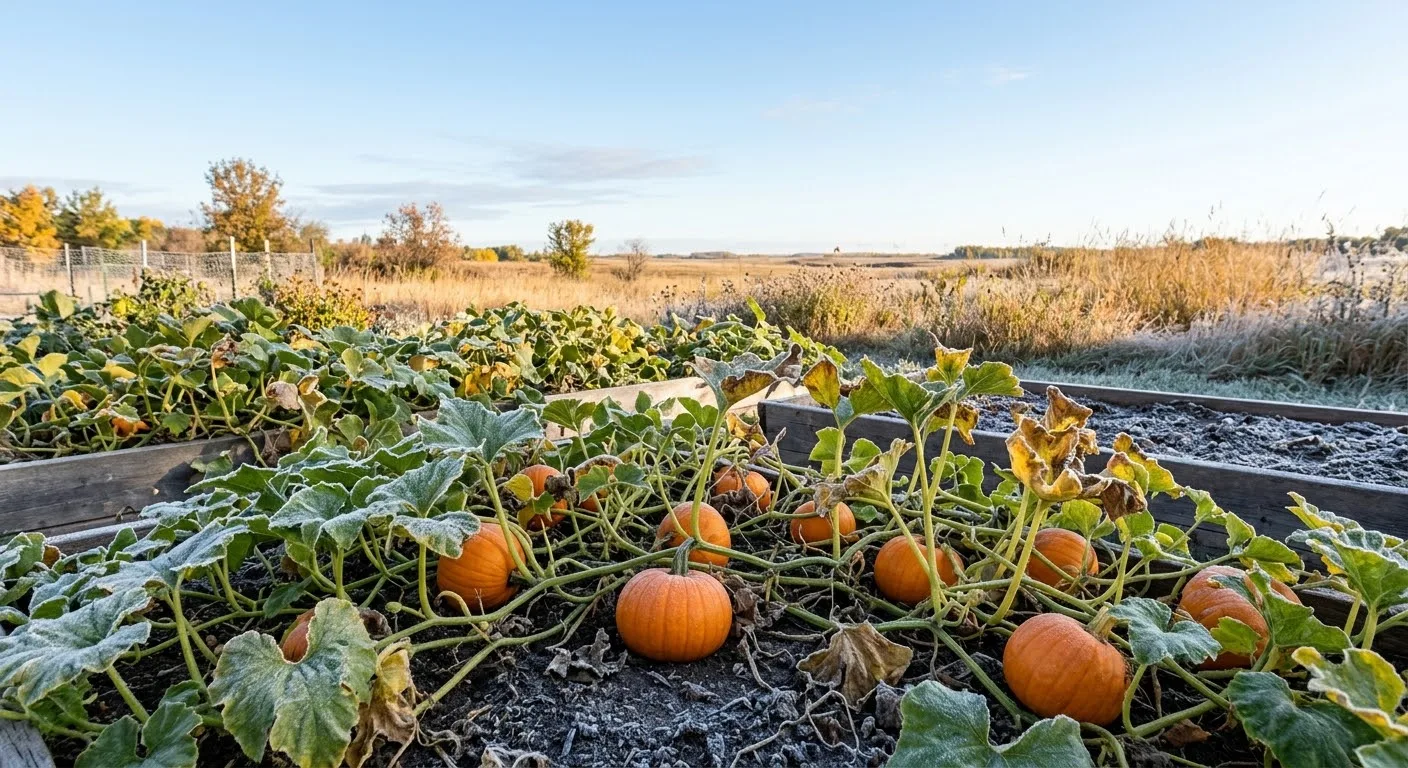
A row of orange pumpkins in October is the goal of a lot of northern gardeners, and also a common disappointment. Pumpkins need 90 to 115 warm days, and many popular varieties simply do not have time to colour up before frost. Pick an early variety, start it indoors and keep it warm, and you can grow good pumpkins even on the Prairies.
The short answer
- Choose varieties that mature in about 100 days or less, and grow them from transplants.
- Start seeds 2 to 3 weeks before planting out; transplant at 10 to 14 days old.
- Plant out about 2 weeks after your average last frost, when days are above 18°C and the soil is at least 18°C.
- Harvest before a hard frost. Mature fruit handles about −2 to −3°C; vines die at 0°C.
Based on the University of Saskatchewan pumpkin guide.
Pumpkin varieties for a short season
USask points to North Dakota State University trials, run in a similar prairie climate. Some of the recommended varieties:
| Use | Varieties |
|---|---|
| Cooking and pies | Small Sugar, Cinderella’s Carriage |
| Jack-o’-lanterns | Early Dakota Howden, Early Giant, Early King, Autumn Gold, Magic Lantern, Gladiator, Howden |
| Ornamental and minis | Jack Be Little, Casperita, Blaze |
| Containers and the earliest harvest | Jack of all Trades, Jack Be Little |
| Giants (long season, a gamble) | Dill’s Atlantic Giant, Big Moose, Polar Bear |
Always check the days to maturity on the seed packet against the length of your frost-free season. Direct seeding only makes sense for varieties under about 100 days.
Start indoors
Like squash, pumpkins grow fast and resent root disturbance, so keep the indoor stage short:
- Sow 2 seeds per pot, 1 cm deep, and keep the best seedling.
- Seeds sprout in 5 to 6 days at about 24°C.
- Give 14 hours or more of light a day.
- Harden off for at least 3 days before planting out.
USask gives Saskatoon as an example: sow indoors around May 7 and plant out in late May or early June. Further north, push everything two to three weeks later. Our guide to starting seeds indoors covers lights and heat mats.
Planting and spacing
- Warm the soil with clear plastic for two weeks before planting.
- Space transplants about 25 cm apart in rows 90 cm apart; vining types will spread far beyond that, so give them room.
- Containers need at least 19 litres (5 gallons) and a drainage hole; use compact, early types.
- Black plastic mulch, row covers or low tunnels keep plants growing on cool nights. Take covers off as soon as flowers open so bees can pollinate.
Water and feed
Give about 2.5 cm of water a week early in the season and twice that from mid-July, when fruit is sizing up. Dry soil means small pumpkins. A balanced soluble fertilizer weekly before fruit set, and twice weekly after, keeps vines productive.
Getting pumpkins to turn orange
- Remove late female flowers in August. They will not have time to become ripe fruit.
- Lift fruit off wet soil onto a board or straw to prevent rot.
- If frost threatens, cover vines overnight with a frost blanket.
- Full-size green pumpkins can finish ripening indoors: USask describes about 4 weeks at 20°C in a warm, dry spot.
Harvest and storage
Harvest as late as you safely can, before a hard frost. Cut with pruners, leaving at least 3 cm of stem, and never carry pumpkins by the stem. Store ripe pumpkins at about 10°C in a dry place, where they keep for months.
How many pumpkins per plant?
In a short season, fewer fruit ripen better. Small pie and mini pumpkins can carry four to eight fruit per vine. For jack-o’-lanterns, leave two or three fruit per plant. For the biggest pumpkin you can grow before frost, keep just one and remove the rest once it is the size of a softball.
Common pumpkin problems
| Problem | Likely cause | Fix |
|---|---|---|
| Lots of flowers, no fruit | Early flowers are male; females come later, or bees are scarce | Be patient; hand-pollinate in the morning |
| Small fruit turns yellow and drops | Poor pollination or stress from drought | Hand-pollinate; water deeply |
| White powder on leaves | Powdery mildew | Space plants, water at the base, remove the worst leaves |
| Chewed seedlings | Cucumber beetles or cutworms | Row covers and cutworm collars at planting |
| Rot underneath the fruit | Contact with wet soil | Set fruit on a board or straw |
Curing pumpkins for storage
After harvest, cure pumpkins for about one to two weeks in a warm, dry, airy place to harden the skin. Wipe off soil, avoid bruising them, and then move them to cool, dry storage at around 10°C. Check them every couple of weeks and use any with soft spots right away.
Saving pumpkin seeds
Roast seeds from any pumpkin for snacking. If you want to save seed for planting, use open-pollinated varieties only and grow just one variety of the same species, since pumpkins cross readily with other squash in the garden. Seed from hybrid pumpkins will not grow true to type.
Planning next season? Save this guide to your Pinterest board so it is there when you need it.
Gear that helps
- Biodegradable seed starting pots: Squash, pumpkins and cucumbers dislike root disturbance. Plant the whole pot.
- Seedling heat mat with thermostat: Bottom heat speeds germination of tomatoes, peppers and squash. The thermostat stops it from cooking the seeds.
- Soaker hose: Waters the soil, not the leaves, which helps prevent disease and wastes less water.
As an Amazon Associate, Short Season Grower earns from qualifying purchases. Links open Amazon search results so you can compare brands, sizes and prices.
Keep reading
Frequently Asked Questions
How long do pumpkins take to grow?
About 90 to 115 days depending on the type. In a short season, choose varieties that mature in 100 days or less and grow them from transplants.
When should I start pumpkin seeds indoors?
Two to three weeks before planting out. Transplant at 10 to 14 days old, about two weeks after your average last frost.
Will green pumpkins ripen after picking?
Full-size green pumpkins can ripen indoors in about four weeks at around 20°C in a warm, dry spot.
What is the best small pumpkin for a short season?
Jack Be Little and Jack of all Trades are early-maturing and suit containers. Small Sugar is a reliable pie pumpkin.
How many pumpkins should I leave on one plant?
In a short season, leave two or three jack-o'-lantern pumpkins per vine, or just one if you want the largest fruit. Small pie and mini types can carry four to eight.
Why does my pumpkin plant have flowers but no pumpkins?
The first flowers are usually male. Female flowers, with a tiny pumpkin at the base, come one to two weeks later. If they still do not set fruit, hand-pollinate in the morning.