
When to Plant Tomatoes in Zone 3 (and Which Varieties Ripen in Time)
Tomatoes are the crop that frustrates short-season gardeners the most. The plants grow fine, the vines fill with green fruit, and then the first fall frost arrives before most of it turns red. The fix is not luck. It is timing, the right varieties, and a few tricks to warm the soil.
This guide covers when to plant tomatoes in a zone 3 climate, when to start seeds indoors, which varieties ripen in time, and how to get the most red fruit before frost.
The short answer
- Start seeds indoors about 6 weeks before you plan to transplant. For most zone 3 gardens that means early April.
- Transplant outdoors one to two weeks after your average last spring frost, once nights stay mild. In much of zone 3 that lands between late May and mid-June.
- Choose varieties that ripen in 70 days or less from transplant. Bush types are the safest bet.
- Warm the soil with black plastic mulch or water-filled plant protectors to gain two weeks or more.
First, what “zone 3” means for tomatoes
Hardiness zones describe how cold your winter gets. Tomatoes never see winter, so for them the zone is only a rough clue. What really decides your planting date is your last spring frost, and what decides your harvest is the number of warm days before the first fall frost. If you are not sure of your zone, see our guide to growing zones in Canada.
As an example, the University of Saskatchewan gives Saskatoon an average last frost of May 13, while Meadow Lake, further north, averages around June 5 to 7. Two gardens in the same zone can be three weeks apart.
When to start tomato seeds indoors
The USask Gardenline tomato guide recommends starting seeds about six weeks before transplanting. Count back from your transplant date, not your frost date:
| Average last frost | Transplant outdoors | Start seeds indoors |
|---|---|---|
| Mid-May | Late May to early June | Early to mid-April |
| Late May | Early to mid-June | Mid to late April |
| Early June | Mid to late June | Late April to early May |
Starting much earlier is tempting, but seedlings started before April outgrow small pots and get leggy. If you do start early, pot them up into larger containers.
Tips for strong seedlings:
- Sow about 0.5 cm deep in a soilless seed-starting mix.
- Seeds germinate in about a week when the mix is 24 to 32°C. A seedling heat mat makes this easy in a cool house.
- Give them strong light. A window is rarely enough in a northern spring; a grow light a few centimetres above the plants works far better.
- Run a small fan or brush the tops with your hand daily. The movement builds thicker stems.
- Start feeding with a diluted balanced fertilizer once true leaves appear.
When to transplant tomatoes outside
Tomatoes are a warm-season crop. Cold soil and cold nights stall them, and a frost kills them. Wait until:
- your average last frost has passed by one to two weeks,
- the forecast shows no frost for the next week or so,
- the soil has warmed up (cold, wet soil is the most common reason transplants sit still for weeks), and
- the plants have been hardened off for about a week, moving them outdoors for a few more hours each day.
When you plant, bury the stem deeper than it sat in the pot, right up to the lowest leaves. Tomatoes grow roots along the buried stem, which gives you a sturdier plant. Plant on a cloudy day if you can, and keep frost blankets handy for the cold snap that always seems to come in early June.
Best tomato varieties for zone 3
USask advises that varieties needing more than 70 days will likely not fully mature in an average Saskatchewan season. For vining (indeterminate) types, aim for 65 days or less. Days to maturity on seed packets are counted from transplanting, not from sowing.
| Variety | Days to maturity | Type | Fruit |
|---|---|---|---|
| Sub-Arctic Plenty | 42 | Bush (determinate) | Small red, about 2 oz |
| Early Girl | 52 | Vine (indeterminate) | Medium red, 6–8 oz |
| Glacier | 55 | Semi-determinate | Small red, 2–3 oz |
| Stupice | 55 | Vine (indeterminate) | Small to medium red, 3–6 oz |
| Latah | 55 | Bush (determinate) | Small red, 2–3 oz |
| Manitoba | 58 | Bush (determinate) | Medium red, about 6 oz |
| Bush Beefsteak | 62 | Bush (determinate) | Large red, 8–10 oz |
| Oregon Spring | 65 | Bush (determinate) | Medium red, 4–6 oz |
Days to maturity as listed by Garden Betty; seed companies may list slightly different numbers.
Several of these have a prairie track record. Manitoba, Early Girl and Oregon Spring all appear on the early-variety list from USask field trials. Cherry tomatoes are another safe choice: they ripen fast because each fruit is small.
Bush or vine?
Bush (determinate) tomatoes grow to a set size, usually 30 to 90 cm, need little staking, and ripen most of their crop over two or three weeks. That concentrated harvest is exactly what you want when frost is coming. Vine (indeterminate) tomatoes keep growing and fruiting until frost, need stakes or cages, and should be pruned to focus the plant on the fruit it already has.
How to get ripe tomatoes before frost
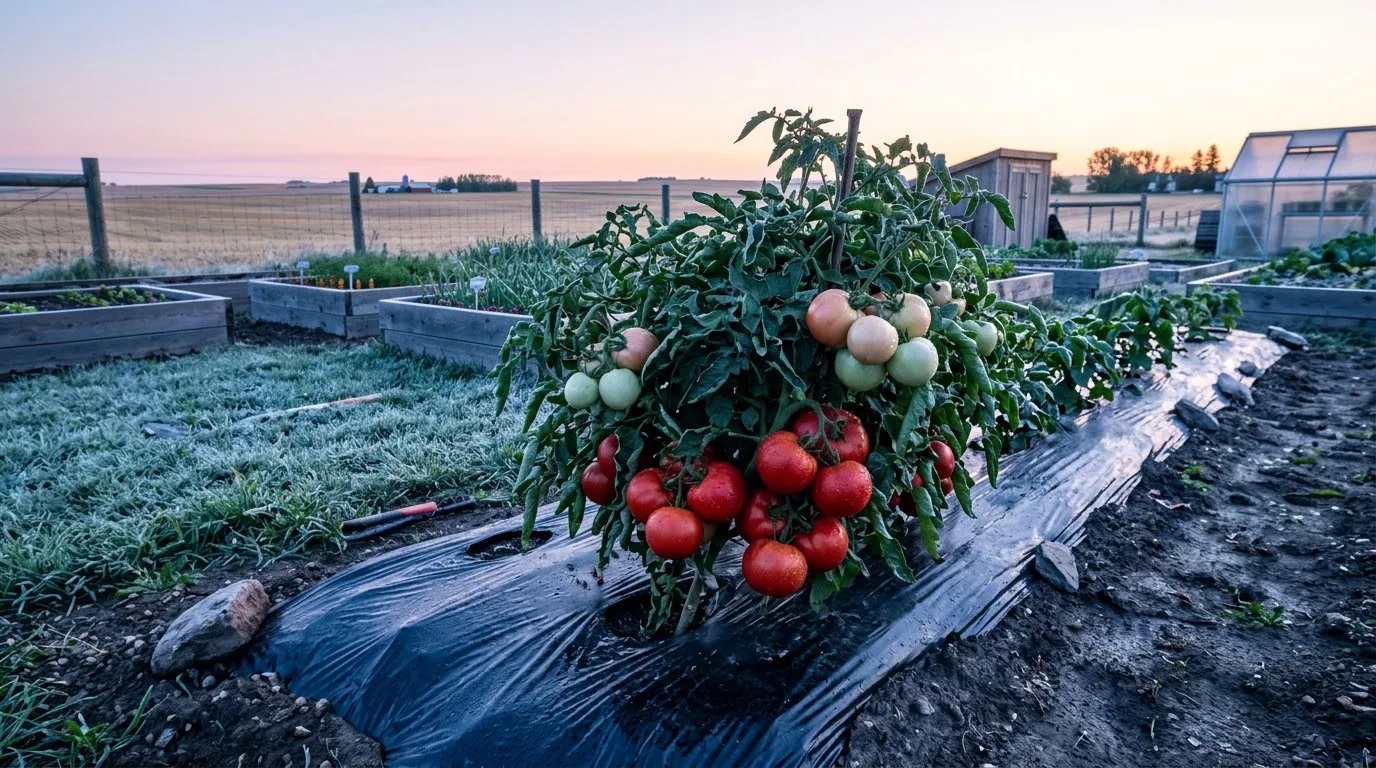
- Warm the soil first. Lay black or dark green plastic mulch over the bed a week before planting. It warms the soil, holds moisture and blocks weeds.
- Use water-filled plant protectors. USask notes that wall-of-water style protectors guard plants to about −11°C and let you transplant at least two weeks earlier on the Prairies.
- Plant in the warmest spot. A south-facing wall or a bed against the house can add days of heat.
- Prune vining types. Pinch off suckers weekly so the plant puts energy into fruit.
- Top the plants in August. About a month before your first fall frost, pinch off the growing tips and any new flowers. Those new flowers will not have time to become ripe fruit.
- Water evenly. About 2.5 cm per week while the plants are growing. Uneven watering causes blossom end rot.
- Skip high-nitrogen fertilizer. It grows leaves instead of fruit.
What to do when frost is coming
When the forecast drops near freezing, cover plants with frost cloth or old sheets overnight. When the season is really over, pick every tomato that is full size and glossy. Mature green tomatoes ripen indoors over two to six weeks at 15 to 22°C. Keep them out of the fridge: tomatoes stored below 10°C suffer chilling injury and lose flavour.
Keep reading
- How to start seeds indoors in a cold climate
- 25 fast-maturing vegetables for a short growing season
- What is my growing zone in Canada?
Frequently Asked Questions
When should I plant tomatoes outside in zone 3?
Transplant tomatoes one to two weeks after your average last spring frost, once the soil has warmed and no frost is forecast. In much of zone 3 that is between late May and mid-June.
When do I start tomato seeds indoors in zone 3?
Start seeds about six weeks before your transplant date. For most zone 3 gardens that means early to mid-April.
What is the fastest tomato to grow in a short season?
Sub-Arctic Plenty is one of the fastest, at around 42 days from transplant. Early Girl, Glacier, Stupice and Manitoba also ripen in roughly 52 to 58 days.
Are bush or vine tomatoes better for short seasons?
Bush (determinate) tomatoes are usually safer because they ripen most of their crop over two or three weeks. Vine types can work too if you choose an early variety and prune them.
Will green tomatoes ripen after I pick them?
Yes, if they are full size and glossy. Mature green tomatoes ripen in two to six weeks at 15 to 22°C. Do not refrigerate them.
3 Comments