Growing Onions in a Short Season: Sets, Seeds and Storage Types
Onions are easy to grow in a cold climate once you match the method to the type. Yellow storage onions from sets are almost foolproof. Big sweet Spanish onions are possible too, but only if you start them indoors early. Here is how to choose and grow them.
The short answer
- Sets (small dormant onions) are the easiest: plant 2.5 cm deep, 7 to 8 cm apart, in rows about 30 cm apart.
- Spanish and sweet onions need a long season. Start them indoors at least 8 weeks before your last frost.
- Yellow storage onions are the easiest to grow and keep the longest.
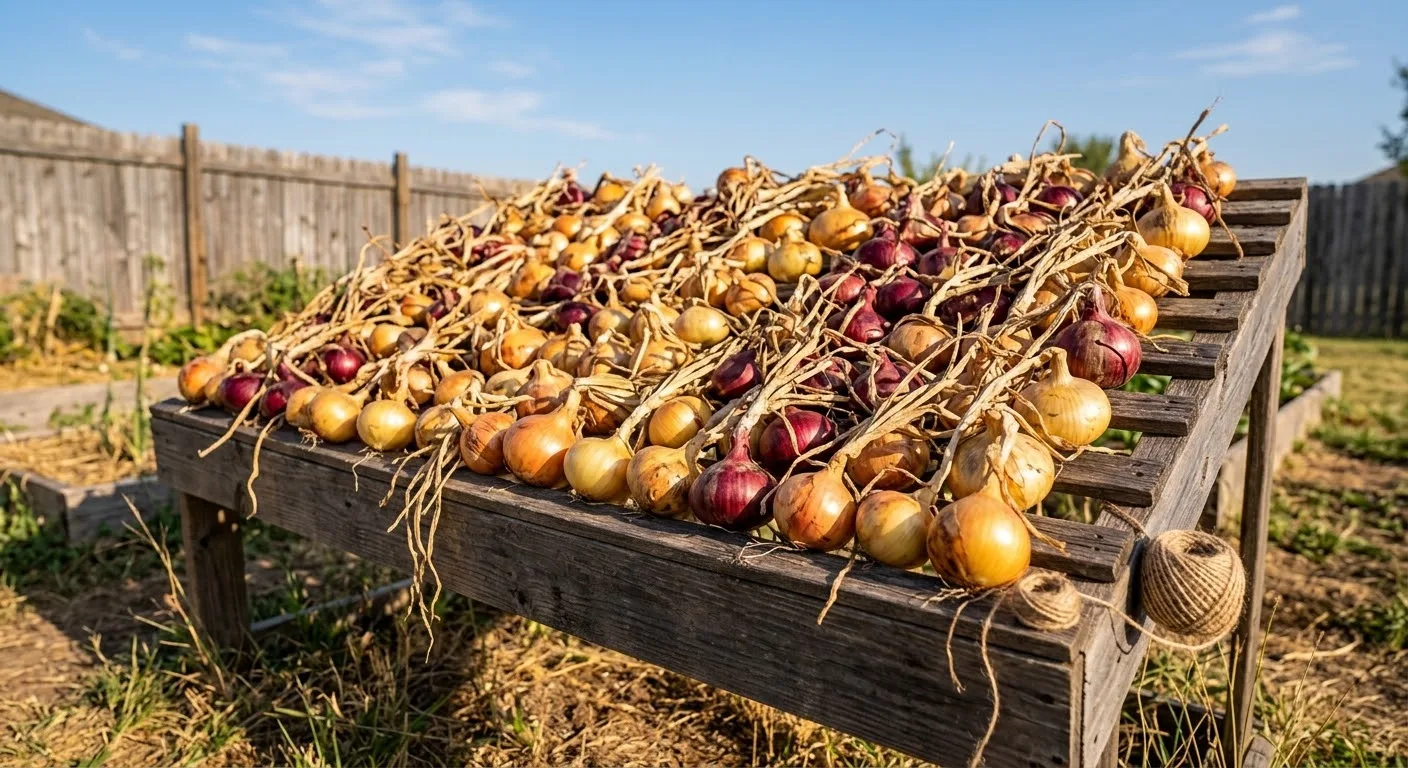
- Harvest when a third to half of the tops have fallen over, then cure about a week at 27°C.
Based on the University of Saskatchewan onion guide.
Seeds, sets or transplants?
| Method | Best for | Notes |
|---|---|---|
| Sets | Beginners, storage onions, green onions | Quick and reliable. Discard soft or damaged sets. |
| Transplants (started indoors) | Spanish and sweet onions | Start at least 8 weeks before your last frost. |
| Direct seed | Some short-season onions and bunching onions | Sow around your last frost date. |
USask notes that white onions often fail to mature on the Prairies and in the far north. Yellow types are the safest bet. For indoor sowing basics, see our guide to starting seeds indoors.
When to plant
Onion sets tolerate cool weather, but USask suggests planting sets and transplants after caragana bushes bloom. That timing helps avoid the peak of onion root maggot flies. In much of the Prairies, that lands around mid to late May.
Planting and spacing
- Plant sets 2.5 cm deep, pointed end up.
- Space 7 to 8 cm apart in the row, with rows about 30 cm apart.
- In containers, use the same spacing in a large pot with drainage holes.
Varieties to try
- Recommended for prairie climates (NDSU, via USask): Ailsa Craig, Candy, Copra, Sweet Sandwich, Walla Walla.
- Yellow storage types from USask trials: Copra, Frontier, Talon, Trailblazer, Sedona, Infinity and others.
- Red: Red Bull, Red Hawk, Mars, Red Beauty.
- Spanish: Kelsae Giant, Riverside Sweet Spanish, Exhibition (start indoors).
- Bunching (green onions): Evergreen Ishikura Improved, Parade, Tokyo Long White.
Water and feed
Onions are shallow-rooted and not drought tolerant. Give about 2.5 cm of water a week, more in sandy soil and hot weather, especially as the bulbs swell. Water early in the day so leaves dry before night. Go easy on nitrogen: too much makes thick necks that store badly. Cut back watering in late summer so bulbs can go dormant.
Harvest and storage
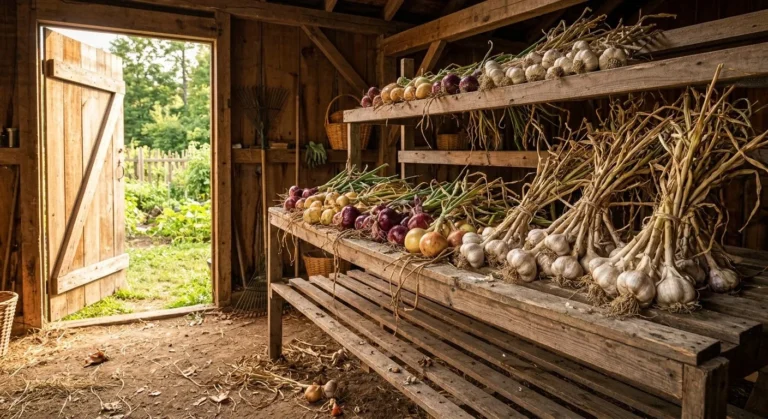
Harvest when a third to half of the tops have dried and fallen over. Lift gently with a fork, cure for about a week in a warm, dry, airy spot at around 27°C, then store at about 10°C with 60 to 70% humidity. Well-cured onions keep 3 to 5 months. Full details are in our guide on how to harvest and cure garlic and onions.
Long-day onions for northern gardens
Onions start forming bulbs in response to day length. In the north, choose long-day varieties, which begin bulbing when days reach about 14 to 16 hours. Short-day onions bred for the southern US bulb too early in the long northern spring and stay small. Most varieties sold on the Prairies and in the northern states are long-day, but check the packet or catalogue.
Green onions and multipliers
- Green onions: sow bunching onion seed every three weeks from spring to midsummer, or plant sets close together and pull them young.
- Multiplier onions (potato onions and shallots): plant a bulb and harvest a cluster. They are hardy, easy and store well.
- Egyptian walking onions: perennial and very hardy; they produce small bulbs on top of the stalk.
Common onion problems
| Problem | Likely cause | Fix |
|---|---|---|
| Onions bolting (flower stalk) | Large sets or cold spells after planting | Use small sets; eat bolted onions first |
| Small bulbs | Weeds, drought, short-day varieties or late planting | Weed often, water steadily, choose long-day types |
| Wilting, tunnelled seedlings | Onion maggots | Row cover; rotate beds |
| Silvery streaks on leaves | Thrips in hot, dry weather | Water well; spray off with water |
Weeding matters most
Onions have thin, upright leaves that cast almost no shade, so weeds overtake them quickly. Weed shallowly and often, especially in the first six weeks, and mulch with straw or grass clippings once plants are established.
Planning next season? Save this guide to your Pinterest board so it is there when you need it.
Gear that helps
- Seed starting trays with humidity domes: Domes hold moisture until seeds sprout; pick trays with drainage holes.
- LED grow light for seedlings: A window alone is too dim in a northern March or April. Keep the light a few centimetres above the plants.
- Mesh produce storage bags: Let air move around stored onions, garlic and potatoes to prevent rot.
As an Amazon Associate, Short Season Grower earns from qualifying purchases. Links open Amazon search results so you can compare brands, sizes and prices.
Keep reading
Frequently Asked Questions
Should I grow onions from sets or seed in a cold climate?
Sets are the easiest and most reliable. Large Spanish and sweet onions need to be started indoors from seed at least 8 weeks before your last frost.
When should I plant onion sets?
The University of Saskatchewan suggests planting after caragana bushes bloom, which helps avoid onion root maggot flies.
Why do my onions have thick necks?
Often too much nitrogen fertilizer or an immature onion. Thick-necked onions do not store well, so use them first.
Which onions grow best on the Prairies?
Yellow storage onions are the easiest. White onions often fail to mature on the Prairies and in the far north.
What are long-day onions?
Long-day onions start forming bulbs when days reach about 14 to 16 hours. They are the right choice for Canada and the northern US.
Why are my onions bolting?
Large sets and cold spells after planting can make onions flower. Use small sets and eat any bolted onions first, since they will not store.