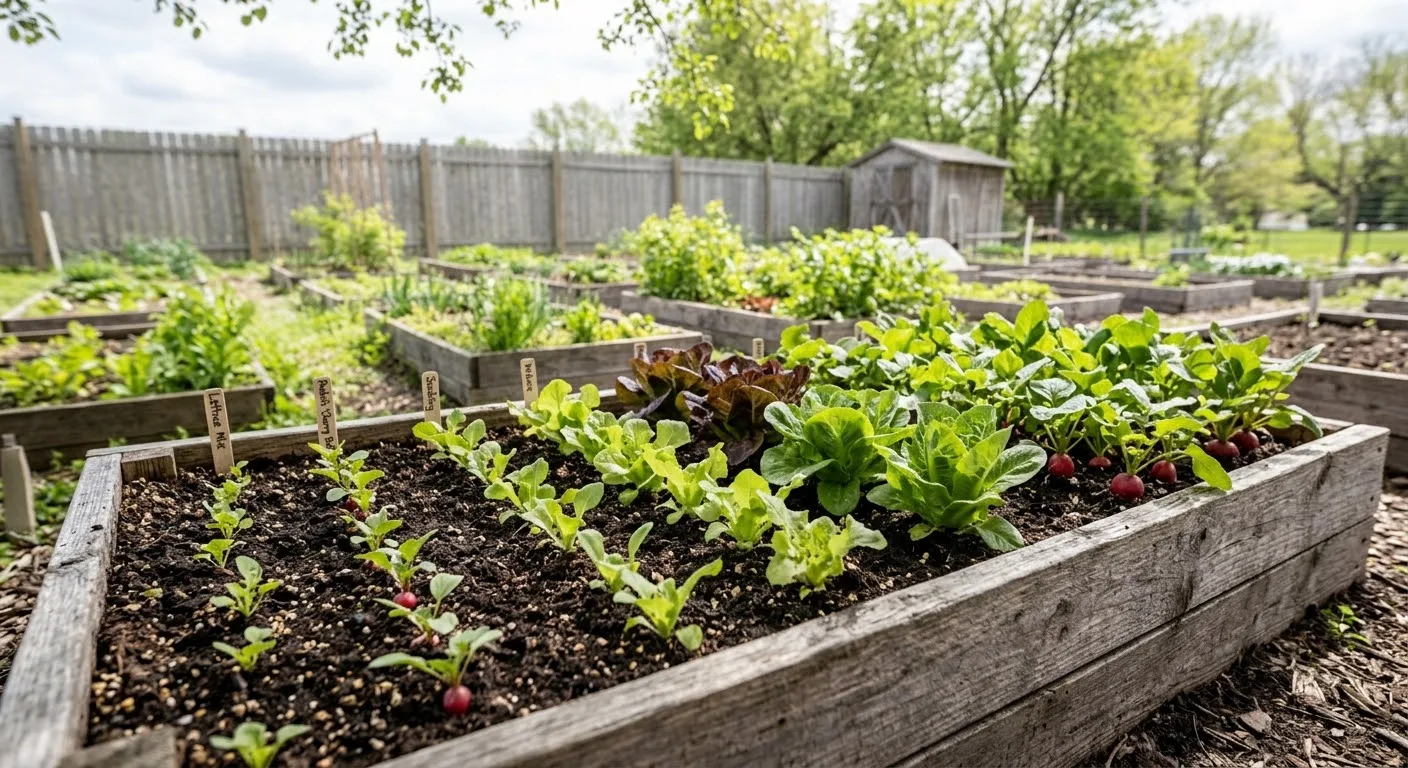
Succession Planting in a Short Season: More Harvests from the Same Space
A short season does not have to mean one short harvest. Succession planting, sowing small amounts several times instead of everything at once, turns a single glut of lettuce or radishes into a steady supply from spring to fall. It also lets you fit two crops into one bed.
The short answer
- Sow small batches every 2 to 3 weeks instead of one big planting.
- Stop most summer sowings by mid-June to early July, depending on the crop.
- Follow early crops with a second crop in the same space.
- Sow fast, cool-season crops again in late summer for fall.
Succession timing by crop
| Crop | How often | Last sowing (cold climate) |
|---|---|---|
| Radishes | Every 2 to 3 weeks | Early July; skip midsummer, then sow again in late August |
| Beans | Every 2 weeks | Mid-June |
| Peas | Every 2 weeks | Mid-June |
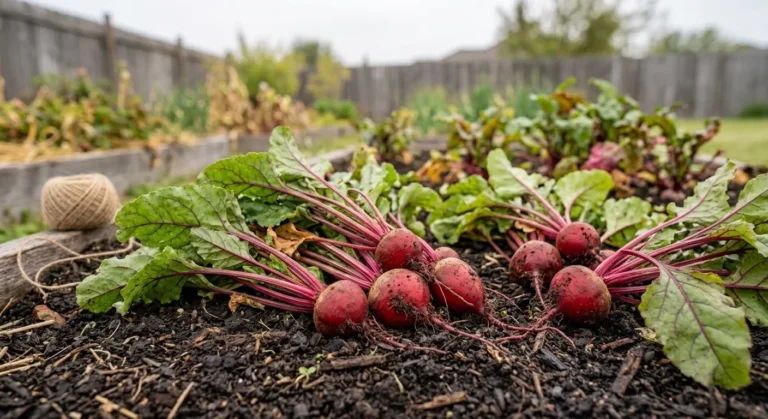
| Beets | Every 2 weeks, about 3 sowings | Early summer |
| Cucumbers | 2 or 3 sowings, 2 weeks apart | Late spring to early summer |
| Kale (baby leaves) | Resow a few times | Through summer |
| Carrots (baby) | Several small sowings | Early summer |
Timing from the University of Saskatchewan Gardenline crop guides listed under Sources.
Three ways to use succession planting
1. Same crop, staggered
The simplest approach. Instead of a whole row of radishes, sow a third of a row every two weeks. Each batch is ready as the last one finishes.
2. Different crops, one after another
Follow an early crop with a later one in the same space. Examples:
- Spring radishes or spinach, then beans once the soil is 15°C.
- Garlic, harvested in July, then a quick fall crop of radishes or kale.
- Early peas, finished by midsummer, then fall radishes or kale transplants.
3. Same crop, different maturity dates
Plant an early, mid and late variety on the same day. They ripen one after another. This works especially well for cabbage, potatoes and strawberries.
Planning around your frost date
For a late-summer sowing, count backward from your average first fall frost: take the days to maturity, add a couple of weeks because growth slows as days shorten and cool, and sow at least that long before frost. Frost-hardy crops like kale, radishes and spinach can push past a light frost; tender crops like beans cannot.
Keep the soil fed
Two crops in one season take more from the soil. Add a layer of compost before each new planting and keep watering steady, especially for midsummer sowings that need moist soil to germinate.
A sample season for one raised bed
| Period | Crop |
|---|---|
| Late April to early June | Spinach and radishes (sown as soon as the soil can be worked) |
| Early June to late August | Bush beans sown after the radishes are pulled |
| Late August to October | Fall lettuce and spinach, under row cover once frosts start |
| Late September | Garlic planted for next year in a separate bed |
Fast crops for succession sowing
| Crop | Days to harvest | Sow every |
|---|---|---|
| Radishes | 25 to 30 | 2 weeks (spring and late summer) |
| Leaf lettuce, baby greens | 30 to 45 | 2 to 3 weeks |
| Spinach | 35 to 45 | 2 weeks (spring and August) |
| Bush beans | 50 to 60 | 2 to 3 weeks until mid-June |
| Beets | 50 to 60 | 2 to 3 weeks until early July |
| Green onions | 40 to 60 | 3 weeks |
Tips for making it work
- Keep seeds and a calendar together. Write next sowing dates on the calendar each time you sow.
- Have transplants ready. Start lettuce or kale seedlings in pots so you can plant them the day a bed opens up.
- Sow small amounts. A 1 m row of lettuce every two weeks is often more useful than a 5 m row once.
- Shade late sowings. Seeds sown in July and August germinate better with shade cloth or a board over the row until they emerge.
Planning next season? Save this guide to your Pinterest board so it is there when you need it.
Gear that helps
- Garden planner journal: Record planting dates, varieties and frosts each year. It becomes your best local guide.
- Plant labels: Track varieties and sowing dates, which matters most when you sow in succession.
- Hand seed sower: Helps you sow tiny seeds thinly, so you have less thinning to do later.
As an Amazon Associate, Short Season Grower earns from qualifying purchases. Links open Amazon search results so you can compare brands, sizes and prices.
Keep reading
- Growing radishes in spring and fall
- Growing beans in a short season
- Growing beets in a cold climate
- 25 fast-maturing vegetables for a short season
Frequently Asked Questions
What is succession planting?
Sowing small amounts of a crop several times, or following one crop with another in the same space, to get a steady harvest instead of one glut.
How often should I sow radishes and beans?
Radishes every 2 to 3 weeks and beans every 2 weeks. Stop beans by mid-June in a cold climate.
What can I plant after garlic?
After garlic is harvested in July, sow quick cool-season crops such as radishes or kale for a fall harvest.
When is the last time to sow vegetables in a short season?
Count back from your first fall frost using the days to maturity plus about two weeks. Hardy crops can go later than tender ones.
What crops are best for succession planting?
Fast crops such as radishes, leaf lettuce, spinach, bush beans, beets and green onions work best, sown every two to three weeks.
What can I plant after spinach and radishes?
Bush beans sown in early June are a good follow-up, and fall lettuce or spinach can follow the beans in late August.