Growing Carrots in a Cold Climate: Sowing, Thinning and Harvest
Carrots are one of the most reliable crops in a cold climate. They germinate in cool soil, shrug off light frost and actually taste sweeter after a cold night. The hard part is getting the tiny seeds to come up, and that is mostly about keeping the soil moist.
The short answer
- Sow directly in the garden 1 to 2 weeks before your last spring frost.
- Sow about 1 cm deep and keep the seedbed constantly moist until seedlings appear.
- Thin to about 8 cm apart.
- Expect 65 to 80 days to full size; leave them in the ground into fall and harvest after a light frost.
Guidance from the University of Saskatchewan carrot guide.
When to sow
Carrots tolerate cool soil, so you can sow a week or two before your average last frost. Germination is slow in cold soil, though: about 7 days at 20°C but up to 17 days at 10°C. For a steady supply, sow a second batch a few weeks later. Do not bother with transplants; carrots grow badly when their roots are disturbed.
The secret to good germination: moisture
Carrot seed is tiny and sits close to the surface. If the top layer dries out even once while the seeds are sprouting, many die. Ways to keep it moist:
- Water lightly once or twice a day until seedlings appear.
- Cover the row with moist vermiculite, then lay a damp cloth or board on top. Remove it as soon as you see seedlings.
- Use pelleted seed or seed tape for easier, even spacing.
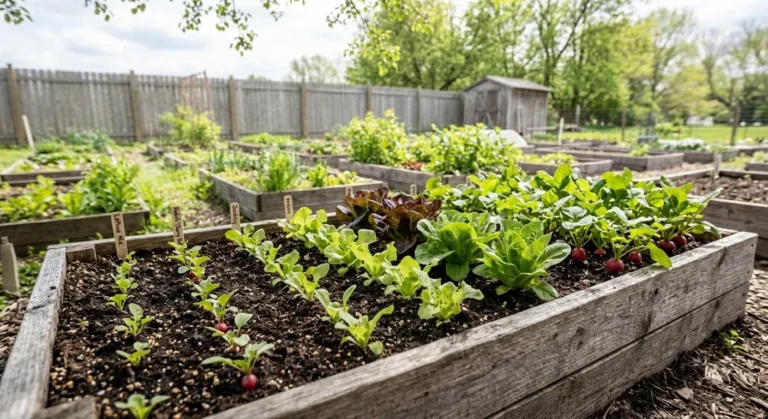
- Mix in a few radish seeds. They come up in days, mark the row and are pulled long before the carrots need the space.
Spacing and thinning
- In rows: sow about 2 cm apart, then thin to about 8 cm. Two rows 8 cm apart can share one strip.
- In raised beds: about 16 plants per square foot (7 to 8 cm apart).
- For baby carrots: sow closer and pull every second carrot when they are pencil-thick; the rest keep growing.
Thinning feels wasteful, but crowded carrots grow twisted and small.
Soil and site
Carrots want full sun and loose soil: sandy loam or loam is ideal. In heavy clay, grow shorter varieties in raised beds, which also warm up faster in spring. Weed carefully when plants are small; young carrots compete poorly.
Which carrots to grow
| Type | Shape and use | Examples |
|---|---|---|
| Nantes | Medium, blunt, sweet; good for loamy soil and containers | Napoli, Bolero, Nelson, Ya Ya |
| Danvers / Chantenay | Shorter and tapered; good in heavier soil, stores well | Danvers Half Long, Royal Chantenay, Cordoba |
| Imperator | Long and slender; stores well but needs deep, loose soil | Autumn King, Bremen |
| Round | Small balls for containers and clay | Thumbelina, Parisian Market |
Water and care
Once growing, carrots need about 2.5 cm of water a week. Uneven watering after a dry spell causes split roots. Leafhoppers are the most common pest on the Prairies; a row cover keeps them off.
Harvest
- Baby carrots: about 7.5 to 10 cm long.
- Full size: around 2.5 cm across. Most varieties lose flavour beyond about 4 cm.
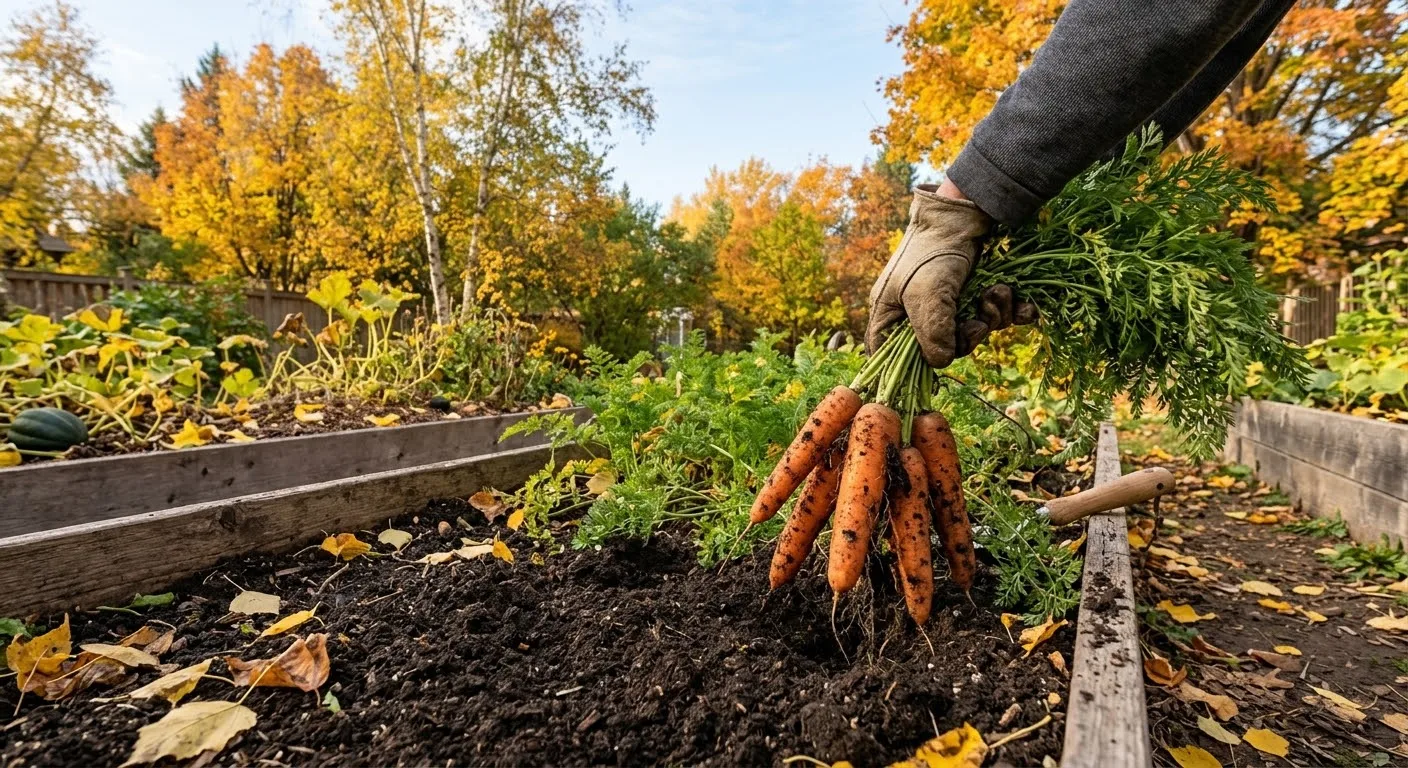
- Leave the main crop in the ground into October. A light frost sweetens them, and they keep well as long as the soil stays above about −1°C.
- Water two days before digging if the soil is hard.
For long-term storage, see how to store root vegetables over winter.
Keep reading
Frequently Asked Questions
When should I plant carrots in a cold climate?
Sow them directly in the garden about one to two weeks before your average last spring frost. Carrots tolerate cool soil.
Why are my carrot seeds not coming up?
Usually the soil surface dried out while the seeds were sprouting. Keep the seedbed constantly moist, water lightly once or twice a day, or cover the row with a damp board until seedlings appear.
How far apart should carrots be?
Thin carrots to about 8 cm apart, or about 16 plants per square foot in a raised bed.
Can carrots stay in the ground after frost?
Yes. A light frost makes them sweeter, and they keep in the ground as long as the soil stays above about −1°C.