Minnesota Vegetable Planting Calendar (Twin Cities to the North Woods)
Minnesota stretches from long-season gardens in the south to some of the shortest seasons in the lower 48. The Twin Cities average more than 160 frost-free days; up north around Bemidji and International Falls, it is closer to 115 to 120. One statewide planting date would be wrong for most of the state.
The short answer
- Average last spring frost ranges from about April 30 in the Twin Cities to late May up north. Northern Gardener puts much of Minnesota around May 10.
- University of Minnesota Extension recommends direct-seeding lettuce as soon as the soil is workable in April.
- Tomatoes and peppers go out one to two weeks after your local last frost, typically mid-May in the south and early June in the north.
Average frost dates in Minnesota
| Location (climate station) | Average last spring frost | Average first fall frost | Frost-free days |
|---|---|---|---|
| Minneapolis–St. Paul | Apr 30 | Oct 10 | 162 |
| St. Cloud | May 13 | Sep 25 | 134 |
| Duluth (harbor) | May 22 | Oct 5 | 135 |
| Bemidji area (Cass Lake) | May 22 | Sep 20 | 120 |
| Rochester | May 5 | Oct 1 | 148 |
| Mankato | May 4 | Oct 2 | 150 |
| Brainerd | May 13 | Sep 24 | 133 |
| Moorhead | May 11 | Sep 28 | 139 |
| International Falls area (Fort Frances, ON) | May 25 | Sep 16 | 113 |
Dates from The Old Farmer’s Almanac, based on NOAA 1991–2020 climate data at the nearest station with a 30% probability threshold. International Falls uses the Fort Frances, Ontario station across the river (Environment Canada normals).
Minnesota planting calendar
| Task | Twin Cities | St. Cloud | Duluth | Bemidji area |
|---|---|---|---|---|
| Start onions and leeks indoors | Mar 5 | Mar 18 | Mar 27 | Mar 27 |
| Start peppers indoors | Mar 15 | Mar 28 | Apr 6 | Apr 6 |
| Start broccoli and cabbage indoors | Mar 23 | Apr 5 | Apr 14 | Apr 14 |
| Start tomatoes indoors | Mar 29 | Apr 11 | Apr 20 | Apr 20 |
| Sow peas, spinach, lettuce, radishes outdoors (soil workable, ~10°C for peas) | Apr 16 | Apr 29 | May 8 | May 8 |
| Sow carrots and beets outdoors | Apr 20 | May 3 | May 12 | May 12 |
| Plant potatoes (soil above ~7°C) | Apr 30 | May 13 | May 22 | May 22 |
| Transplant broccoli and cabbage (nights above −2°C) | May 3 | May 16 | May 25 | May 25 |
| Sow beans (soil at least 15°C) | May 7 | May 20 | May 29 | May 29 |
| Transplant tomatoes and peppers | May 10 | May 23 | Jun 1 | Jun 1 |
| Transplant or sow cucumbers, squash, pumpkins (days and nights 18°C+) | May 14 | May 27 | Jun 5 | Jun 5 |
| Last sowing of bush beans for a fall crop | Aug 11 | Jul 27 | Aug 6 | Jul 22 |
| Last sowing of spinach and leaf lettuce | Aug 26 | Aug 11 | Aug 21 | Aug 6 |
| Last sowing of radishes | Sep 10 | Aug 26 | Sep 5 | Aug 21 |
How these dates were worked out
Each date is counted from the local average frost dates, using crop timing from the University of Saskatchewan Gardenline guides for short-season gardens and fall sowing guidance from University of Minnesota Extension:
- Onions and leeks start indoors at least 8 weeks before the last frost; peppers about 8 weeks and tomatoes about 6 weeks before transplanting; broccoli and cabbage 5 to 6 weeks before.
- Peas, spinach, lettuce and radishes go in 1 to 2 weeks before the last frost once the soil is workable; carrots and beets about the same time.
- Beans wait for soil around 15°C (about 60°F); cucumbers and squash for warm days and nights.
- Fall crops are counted back from the first frost using days to maturity: kale and the cabbage family are the best midsummer sowings, according to UMN Extension.
Northern Gardener suggests starting tomatoes indoors in early April for a late-May or early-June planting, which matches the central and northern columns above. Adjust to your soil temperature and forecast. Harden off seedlings for about a week first: how to harden off seedlings.
Fall crops and garlic
Minnesota’s longer fall in the south leaves room for a second planting. UMN Extension lists kale, cabbage, collards and Brussels sprouts as the hardiest fall crops, surviving down to about 20°F, while beets, green onions and peas survive the high 20s. See succession planting in a short season. Garlic goes in during fall for harvest the next July: when to plant garlic.
Gear that helps
- Seed starting trays with humidity domes: Domes hold moisture until seeds sprout; pick trays with drainage holes.
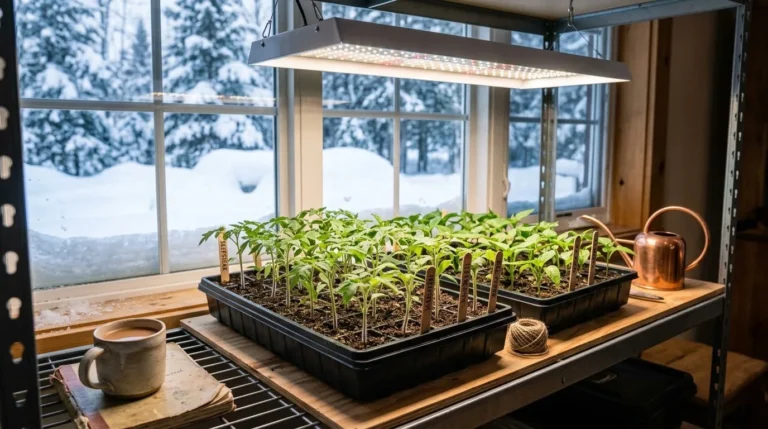
- LED grow light for seedlings: A window alone is too dim in a northern March or April. Keep the light a few centimetres above the plants.
- Frost cloth plant covers: Gives a few degrees of protection on cold spring and fall nights. Remove or vent it on warm days.
- Soil thermometer: Soil temperature, not the calendar, tells you when seeds will actually sprout.
As an Amazon Associate, Short Season Grower earns from qualifying purchases. Links open Amazon search results so you can compare brands, sizes and prices.
Frequently Asked Questions
When is the last frost in Minneapolis?
Based on NOAA 1991–2020 data, the average last spring frost in the Twin Cities is around April 30, and the first fall frost around October 10.
When should I plant tomatoes in Minnesota?
One to two weeks after your local last frost: around mid-May in the Twin Cities and late May to early June in central and northern Minnesota.
When can I plant lettuce in Minnesota?
University of Minnesota Extension recommends direct-seeding lettuce as soon as the soil is workable in April. Lettuce tolerates cool weather but bolts in heat.
How long is the growing season in northern Minnesota?
Around Bemidji (Cass Lake station) about 120 frost-free days, and around International Falls about 113.