Best Soil Thermometers for Knowing When to Plant
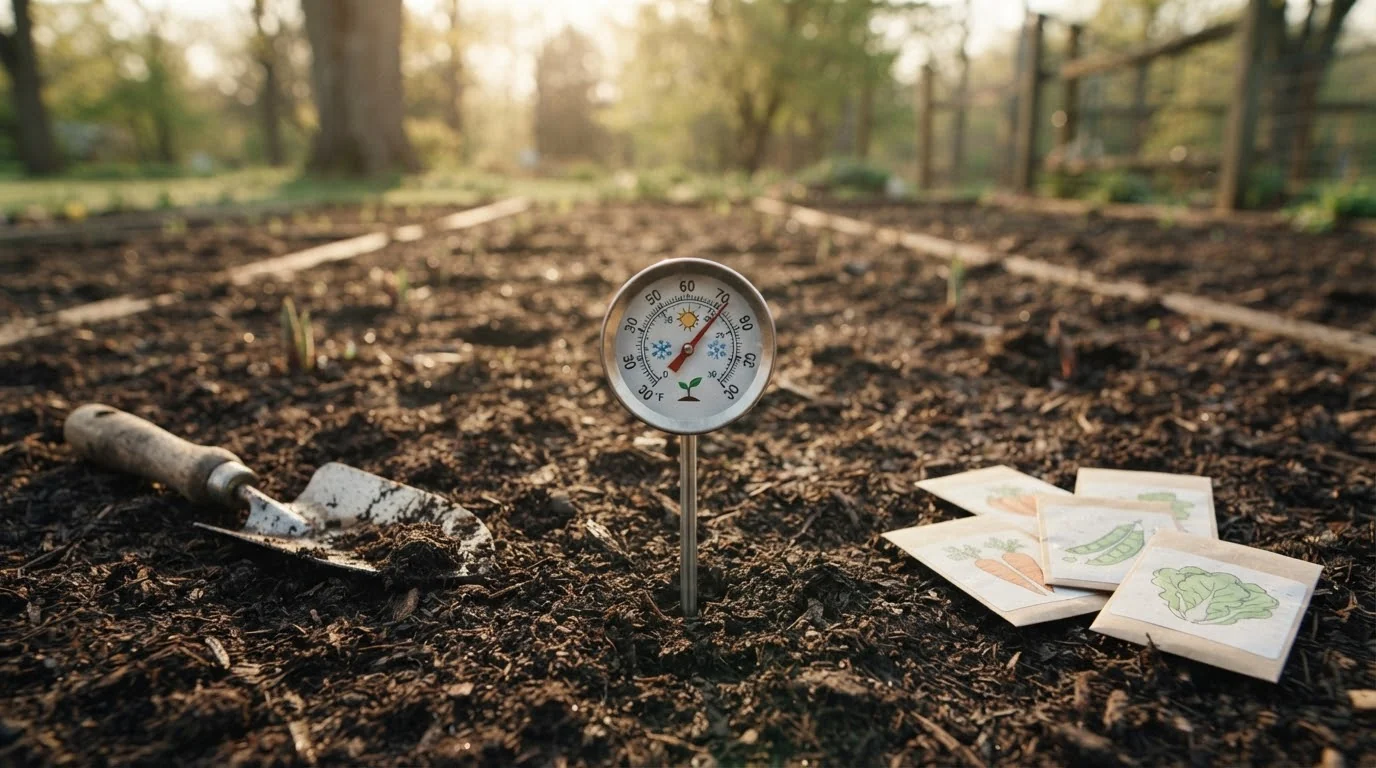
In a short season, the calendar tells you when it might be safe to plant, but the soil tells you when it actually is. Beans rot in cold soil, squash sulks below 18°C and peas sit for weeks in soil that has not warmed. A soil thermometer is one of the cheapest tools in the garden and one of the most useful for northern gardeners.
How we chose: we have not tested these thermometers side by side. Picks are based on manufacturer specifications, published roundups and extension advice on planting by soil temperature (see Sources).
The short answer
- Best simple dial: Luster Leaf Rapitest 1625 Soil Thermometer. No batteries, a stainless probe and planting guidance printed on the dial.
- Best digital: Luster Leaf Rapitest Digital Soil Thermometer, quick to read in both °C and °F.
- Also checks compost: a REOTEMP compost thermometer with a 50 cm (20 in) stem reads deep soil and compost piles.
- Hands-off monitoring: a wireless soil temperature sensor that logs readings to your phone.
Soil thermometer types compared
| Type | Pros | Cons | Best for |
|---|---|---|---|
| Analog dial (short stem) | Cheap, no batteries, durable | Slower to settle; dial can fog | Checking seed depth before sowing |
| Digital probe | Fast, precise, easy to read | Needs batteries | Quick checks in several beds |
| Long-stem compost thermometer | Reads deep soil and compost piles | More expensive; overkill for seed depth alone | Composters, deeper root zones |
| Wireless sensor | Logs temperatures over time, no daily trips | Costs more; needs an app or base station | Tracking trends through spring |
Soil temperatures to plant by
| Crop | Minimum soil temperature |
|---|---|
| Peas, spinach, lettuce, radishes | About 4 to 7°C (germination is slow at the low end) |
| Carrots, beets, onions | About 7 to 10°C |
| Potatoes | About 7°C |
| Sweet corn | About 10 to 16°C, depending on variety |
| Beans | About 15 to 16°C |
| Squash, cucumbers, melons | About 18°C |
| Tomatoes and peppers (transplants) | About 15 to 16°C, with warm nights |
NDSU Extension recommends using soil moisture and temperature, not just the calendar, to decide when to sow in a fickle northern spring.
How to take an accurate reading
- Measure at seed depth: about 5 cm for small seeds and 10 cm for beans, corn and potatoes.
- Read in the morning, when soil is coolest. An afternoon reading in the sun can be several degrees warmer.
- Check several days in a row. You want a steady trend, not one warm day.
- Use a pilot hole in hard or stony soil, made with a screwdriver, so the probe does not bend.
- Wait for the reading to settle, about a minute for a dial and a few seconds for most digital probes.
What to look for
- Both °C and °F on the dial or display, especially if you use US and Canadian seed packets.
- A stainless steel probe long enough for your seed depth, at least 10 to 15 cm.
- A sealed dial or waterproof housing for spring rain and wet soil.
- Accuracy you can check: a dial thermometer should read about 0°C in a glass of ice water; some can be recalibrated.
Planning next season? Save this guide to your Pinterest board so it is there when you need it.
Gear that helps
- Luster Leaf soil thermometer: Simple, battery-free dial thermometer.
- Digital soil thermometer: Fast readings in °C and °F.
- Compost thermometer: Long stem for deep soil and compost piles.
As an Amazon Associate, Short Season Grower earns from qualifying purchases. Links open Amazon search results so you can compare brands, sizes and prices.
Keep reading
Frequently Asked Questions
How deep should I measure soil temperature?
At seed depth: about 5 cm for small seeds and 10 cm for beans, corn and potatoes.
What soil temperature do beans need?
About 15 to 16°C. In colder soil, bean seed is slow to sprout and may rot.
When should I check soil temperature?
In the morning, when soil is coolest, and over several days to see a steady trend.
Are digital soil thermometers better than dial ones?
Digital probes are faster and easier to read, while dial thermometers need no batteries and are very durable. Both work well if they reach seed depth.