Best Row Covers and Insect Netting for a Short Season
Row covers are the most useful season-extension tool in a northern garden. The same roll of fabric keeps flea beetles off kale in June, protects tomatoes from a surprise frost in September and keeps spinach going into November. The trick is buying the right weight for the job, because a fabric that is perfect for frost can cook plants in July.
How we chose: we have not tested these covers side by side. Recommendations are based on manufacturer specifications from Johnny’s Selected Seeds and on USDA NRCS guidance on low tunnels (see Sources).
The short answer
- Insects only, all summer: ProtekNet insect netting or Agribon AG-15.
- Best all-rounder: Agribon AG-19 (about 0.55 oz/yd²), for insects plus light frost.
- Spring and fall frost: Agribon AG-30 (about 0.9 oz/yd²).
- Overwintering hardy crops: Agribon AG-50 or AG-70, heavy covers that block more light.
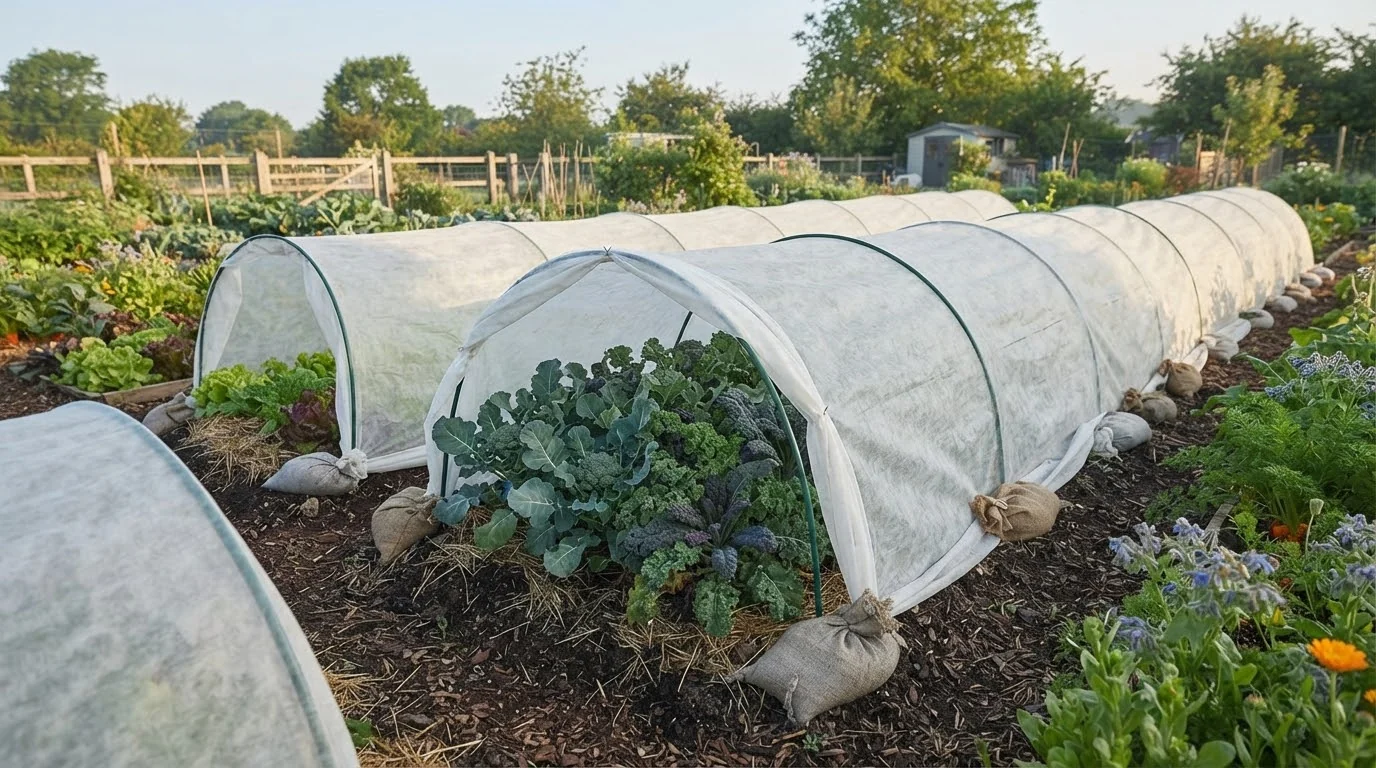
- Do not forget hoops: wire or fibreglass hoops keep fabric off the leaves.
Row cover weights compared
| Cover | Weight (oz/yd²) | Light through | Frost protection | Best use |
|---|---|---|---|---|
| Agribon+ AG-15 | 0.45 | 90% | None | Insect and bird barrier |
| ProtekNet insect netting | 0.74 | 89% | Not rated | Insects on heat-sensitive crops, reusable for years |
| Agribon+ AG-19 | 0.55 | 85% | About 2 to 4°F | Insects plus light frost |
| Agribon+ AG-30 | 0.9 | 70% | About 4 to 6°F | Spring and fall frost, overwintering in moderate climates |
| Agribon+ AG-50 | 1.5 | 50% | About 6 to 8°F | Hard freezes, overwintering |
| Agribon+ AG-70 | 2.0 | 30% | 8°F or more | Overwintering in harsh climates |
Figures from the Johnny’s Selected Seeds row cover comparison chart. Frost protection is in degrees Fahrenheit above outside temperature.
Which cover for which job
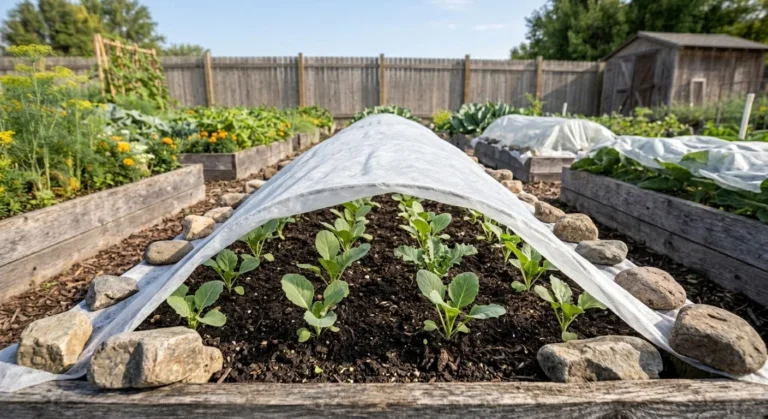
- Brassicas from planting to harvest: AG-15, AG-19 or insect netting, put on right after planting so flea beetles and cabbage moths never reach the crop.
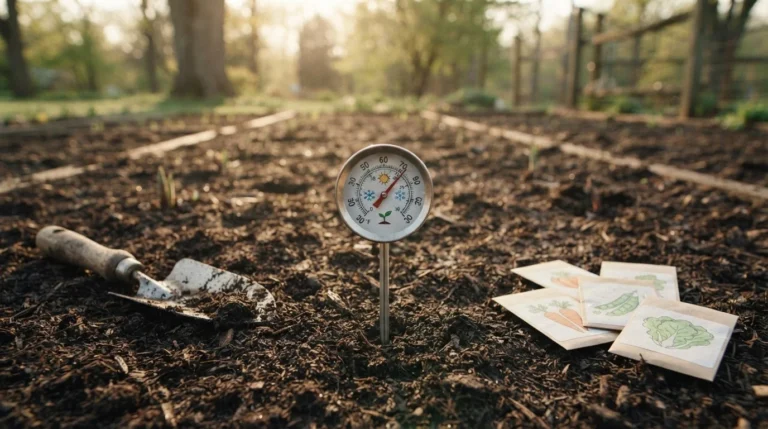
- Early spring sowings: AG-19 or AG-30 over hoops warms the soil a little and protects seedlings from light frost.
- Tender transplants in late May: AG-30 overnight when frost is forecast; remove it on warm days.
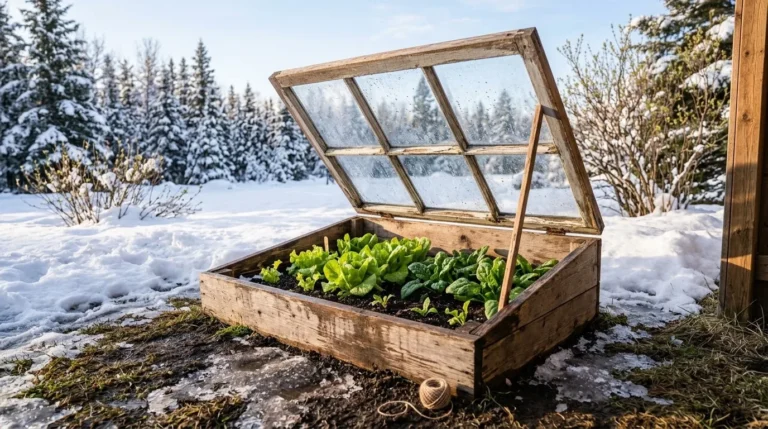
- Fall greens: AG-30 from late September, adding a second layer or plastic on the coldest nights.
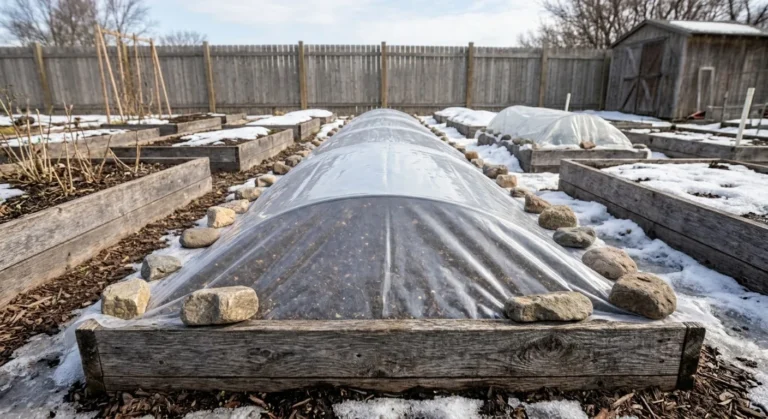
- Overwintering spinach and kale: AG-50 or AG-70, with snow on top as extra insulation.
Tips for using row covers
- Use hoops. Frost can damage leaves through the fabric where it touches them, and hoops prevent wind abrasion.
- Seal the edges. Pin or weigh down edges all the way around with landscape staples, sandbags or boards. Insects find small gaps.
- Uncover for pollination. Squash, cucumbers and melons need bees; remove covers once female flowers open.
- Watch summer heat. Heavier fabrics trap heat. In July, switch to the lightest cover or insect netting.
- Buy wide. Covers about 2 m (83 in) wide fit over hoops on a standard 1 to 1.2 m bed with enough to anchor.
Making covers last
Light covers usually last one to three seasons; insect netting can last many years. Take covers off before snow load builds unless you are overwintering crops, let them dry, fold them and store them out of sunlight. Patch small tears with clothespins or tape rather than throwing the whole piece away.
Planning next season? Save this guide to your Pinterest board so it is there when you need it.
Gear that helps
- Agribon AG-19: All-round cover for insects and light frost.
- Agribon AG-30: Heavier cover for spring and fall frost.
- Insect netting: Long-lasting insect barrier for summer.
- Garden hoops: Keep fabric off the leaves.
As an Amazon Associate, Short Season Grower earns from qualifying purchases. Links open Amazon search results so you can compare brands, sizes and prices.
Keep reading
- Keep flea beetles and cabbage worms off brassicas
- How to warm soil in spring
- Growing kale in a cold climate
Frequently Asked Questions
What weight row cover is best for frost?
AG-30 is a good choice for spring and fall frost, giving about 4 to 6°F of protection. Use AG-50 or AG-70 for hard freezes and overwintering.
What row cover is best for insects?
The lightest covers, such as Agribon AG-15 or AG-19, or insect netting like ProtekNet. They let in the most light and air.
Do row covers need hoops?
Hoops are strongly recommended. They keep fabric off leaves, which reduces frost damage where fabric touches plants and prevents wind abrasion.
How long do row covers last?
Light fabric covers usually last one to three seasons. Insect netting can last many years if dried and stored out of the sun.