Average Frost Dates for Canadian Cities (and the Northern US)
Every planting date in a short-season garden starts with two numbers: the average date of the last spring frost and the average date of the first fall frost. The gap between them is your frost-free season, and it decides which crops will finish and which need a head start indoors.
Below are average frost dates for cities across Canada and the northern United States, followed by how to use them and why your own garden may differ.
The short answer
- Across the Prairies, the average last spring frost falls between mid-May and early June, and the first fall frost between late August and mid-September.
- That leaves roughly 90 to 125 frost-free days in most prairie towns, and far fewer in the north: about 70 days in Fort McMurray and Whitehorse, under 60 in Thompson.
- An “average” frost date is not a safe date. Plant tender crops a week or two after it, and keep frost covers handy.
Average frost dates: Canada
| Location (climate station) | Average last spring frost | Average first fall frost | Frost-free days |
|---|---|---|---|
| Edmonton, AB (Edmonton City Centre) | May 15 | Sep 16 | 123 |
| Calgary area, AB (Madden) | May 29 | Sep 6 | 99 |
| Red Deer, AB | May 24 | Sep 10 | 108 |
| Lethbridge, AB | May 25 | Sep 11 | 108 |
| Medicine Hat, AB | May 18 | Sep 14 | 118 |
| Grande Prairie, AB | May 22 | Sep 6 | 106 |
| Fort McMurray, AB | Jun 15 | Aug 26 | 71 |
| Saskatoon, SK | May 15 | Sep 19 | 126 |
| Regina area, SK (Cupar) | Jun 1 | Sep 1 | 91 |
| Prince Albert, SK | Jun 7 | Sep 4 | 88 |
| Swift Current, SK | May 23 | Sep 13 | 112 |
| Yorkton, SK | May 26 | Sep 10 | 106 |
| Winnipeg area, MB (Stony Mountain) | May 21 | Sep 15 | 116 |
| Brandon, MB | Jun 6 | Sep 7 | 92 |
| Dauphin, MB | Jun 1 | Sep 11 | 101 |
| Thompson, MB | Jun 18 | Aug 16 | 58 |
| Ottawa, ON | May 13 | Sep 26 | 135 |
| Sudbury, ON | May 21 | Sep 23 | 124 |
| Thunder Bay, ON | Jun 6 | Sep 9 | 94 |
| Timmins area, ON (Porcupine) | Jun 13 | Sep 8 | 86 |
| Quebec City, QC | May 17 | Sep 24 | 129 |
| Fredericton, NB | May 22 | Sep 25 | 125 |
| Prince George, BC | May 20 | Sep 18 | 120 |
| Fort St. John, BC | May 22 | Sep 8 | 108 |
| Whitehorse, YT | Jun 12 | Aug 24 | 72 |
| Yellowknife, NT | May 31 | Sep 11 | 102 |
Dates from The Old Farmer’s Almanac, calculated from Environment Canada 1981–2010 climate normals at the nearest climate station, using a 33% probability threshold. Where the nearest station is outside the city, it is named in brackets.
Average frost dates: northern United States
| Location (climate station) | Average last spring frost | Average first fall frost | Frost-free days |
|---|---|---|---|
| Minneapolis–St. Paul, MN | Apr 30 | Oct 10 | 162 |
| St. Cloud, MN | May 13 | Sep 25 | 134 |
| Duluth, MN | May 22 | Oct 5 | 135 |
| Bemidji area, MN (Cass Lake) | May 22 | Sep 20 | 120 |
| International Falls area (Fort Frances, ON) | May 25 | Sep 16 | 113 |
| Fargo–Moorhead | May 11 | Sep 28 | 139 |
| Bismarck, ND | May 14 | Sep 25 | 133 |
| Minot, ND | May 15 | Sep 27 | 134 |
| Great Falls, MT | May 11 | Sep 25 | 136 |
| Caribou, ME | May 13 | Sep 25 | 134 |
US dates from The Old Farmer’s Almanac, based on NOAA 1991–2020 climate data with a 30% probability threshold.
What “average frost date” really means
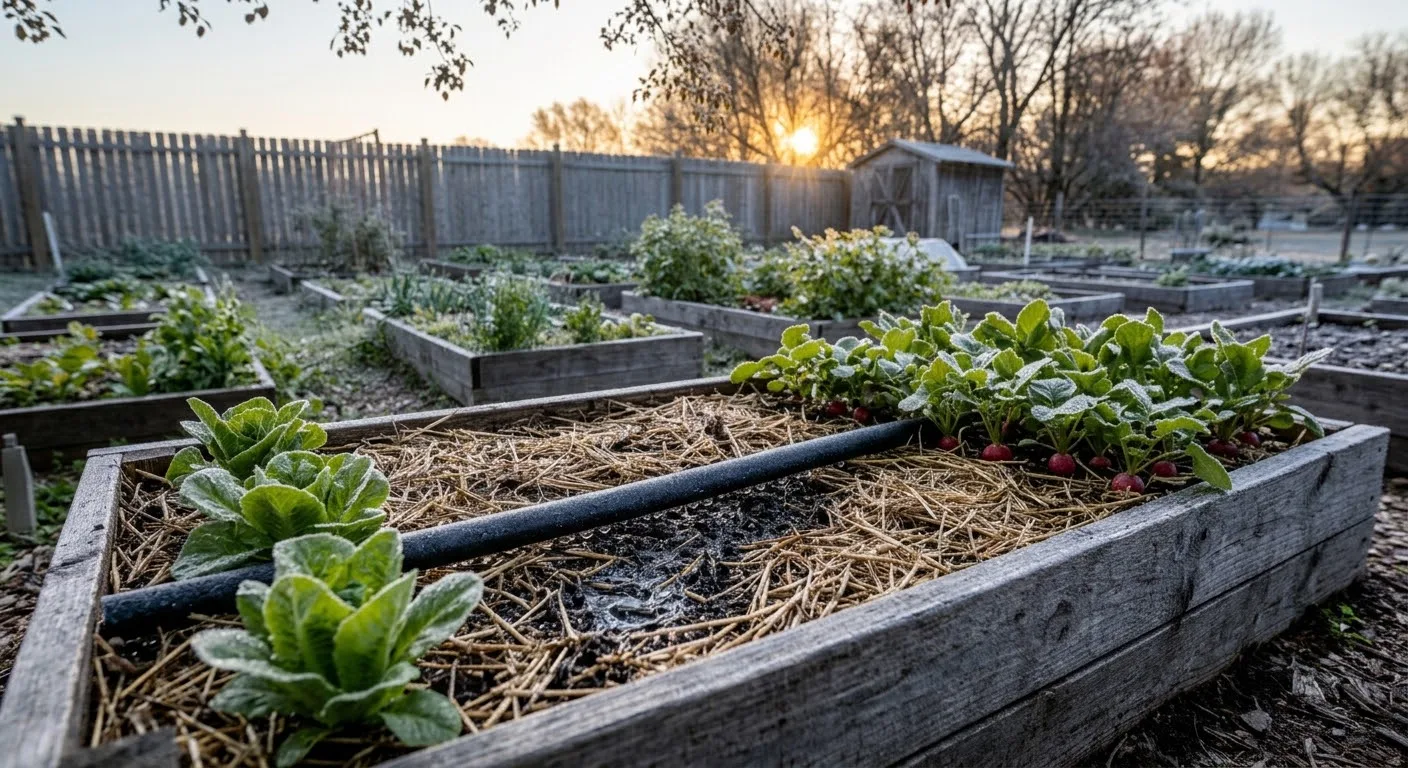
These dates are not promises. With a roughly 30% probability threshold, there is still about a 3 in 10 chance of frost after the listed spring date, and the same chance of frost before the listed fall date. Some years are generous; others bring snow in June.
Notice too that the station matters. The Calgary figures above come from Madden, northwest of the city and higher up; gardens in the city itself usually run a little warmer. The same is true for Regina (Cupar station) and Winnipeg (Stony Mountain). Cities hold heat, so urban yards often gain several days at each end of the season.
How to use your frost dates
- Cool-season crops such as peas, spinach, lettuce and radishes can be sown one to two weeks before the last frost, once the soil can be worked.
- Potatoes, carrots and beets go in around the last frost date.
- Tender crops like tomatoes, peppers, beans, cucumbers and squash go out one to two weeks after the last frost, when nights stay mild. See our guide to planting tomatoes in zone 3.
- Indoor seed starting is counted back from the transplant date. Our seed starting guide has the timing for each crop.
- Fall crops are counted back from the first fall frost using each crop’s days to maturity.
Frost dates are not hardiness zones
Frost dates tell you about the growing season. Hardiness zones describe how cold the winter gets and matter for perennials, shrubs and fruit trees. For those, see What Is My Growing Zone in Canada?
Make your own garden record
The best frost dates are the ones you keep yourself. Note the date of the last and first frost in your yard each year, along with where frost settled first. After a few seasons you will know whether your garden runs ahead of or behind the nearest station.
Gear that helps
- Min/max garden thermometer: Records the coldest overnight temperature, so you learn how your yard compares with the nearest weather station.
- Frost cloth plant covers: Gives a few degrees of protection on cold spring and fall nights. Remove or vent it on warm days.
- Garden planner journal: Record planting dates, varieties and frosts each year. It becomes your best local guide.
As an Amazon Associate, Short Season Grower earns from qualifying purchases. Links open Amazon search results so you can compare brands, sizes and prices.
Frequently Asked Questions
When is the last frost in Edmonton?
Based on Environment Canada 1981–2010 normals for the Edmonton City Centre station, the average last spring frost is around May 15 and the first fall frost around September 16, giving about 123 frost-free days.
How long is the growing season on the Canadian Prairies?
Most prairie towns have roughly 90 to 125 frost-free days. Northern locations are much shorter, such as about 71 days in Fort McMurray and 58 in Thompson.
Is it safe to plant on the average last frost date?
Not for tender crops. Average dates still carry about a 3 in 10 chance of frost afterward. Plant tomatoes, peppers and squash one to two weeks later and keep covers ready.
Why is my garden warmer than the frost date suggests?
The nearest climate station may be rural or higher up. City yards, south-facing walls and sheltered spots often gain several frost-free days.