Best Garden Forks for Digging Potatoes, Garlic and Root Crops
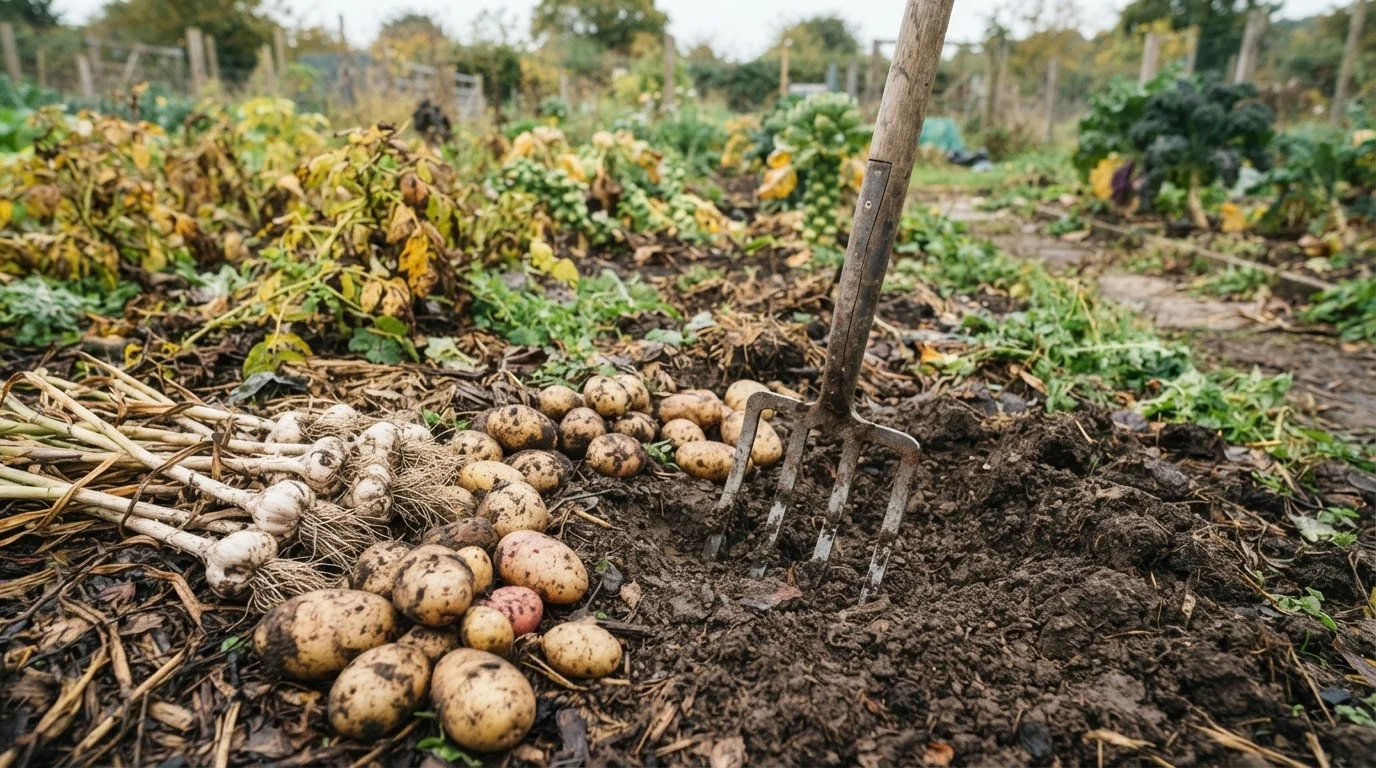
September is digging season in a northern garden: garlic and onions come up in summer, then potatoes, carrots, parsnips and dahlias in fall, often from soil that is heavy, cold and full of clay. A good digging fork lifts crops with less damage than a spade, loosens compacted beds and turns compost. Here are the forks worth considering, and what to look for.
How we chose: we have not tested these forks hands-on. The picks are based on manufacturer specifications and on published hands-on tests by HGTV and Bob Vila (linked under Sources), filtered for what matters in heavy, cold northern soils.
The short answer
- Best value: Truper 4-Tine Spading Fork, a forged steel fork with a wood D-handle.
- Best for heavy clay: Tabor Tools Digging Fork or the HOSS Standard Garden Fork, both all-steel and very strong.
- Best for raised beds: Spear & Jackson Traditional Border Fork, smaller and lighter, with stainless tines.
- Easiest on wrists: Radius Garden 203 PRO Digging Fork, with a round grip.
- For tall gardeners: Fiskars Ergonomic Garden Fork, about 125 cm long.
Garden fork comparison
| Fork | Type | Length | Weight | Best for |
|---|---|---|---|---|
| Truper 4-Tine Spading Fork | Spading fork, forged steel, ash handle | About 76 cm (30 in) | About 1.7 kg | Budget all-rounder, compost, dividing perennials |
| Ames 4-Tine Forged Spading Fork | Spading fork, forged steel, hardwood handle | About 76 cm | About 1.5 kg | Tough soil and roots |
| Tabor Tools Digging Fork | Digging fork, steel | About 102 cm (40 in) | About 2.5 kg | Compacted clay; heavy, durable |
| HOSS Standard Garden Fork | Digging fork, heat-treated steel | About 102 cm | About 2.3 to 2.5 kg | Heavy-duty use, made in the USA |
| Spear & Jackson Traditional Border Fork | Border fork, stainless tines | About 95 cm | About 1.4 kg | Raised beds and tight spaces |
| Radius Garden 203 PRO | Digging fork, stainless, round grip | About 108 cm | About 2.3 kg | Comfort and grip strength issues |
| Fiskars Ergonomic Garden Fork | Digging fork, boron steel | About 125 cm (49 in) | About 2.1 kg | Tall users, stony soil |
Lengths and weights are approximate, from manufacturer listings and the test articles cited below.
Digging fork, spading fork or border fork?
- Digging forks have strong, square or flat tines and long handles. They are best for breaking up compacted soil and lifting potatoes.
- Spading forks are shorter, often with a D-handle, and work well for general digging, turning compost and lifting garlic.
- Border forks have a smaller head and are lighter. They are ideal for raised beds, between plants and for gardeners who want less weight.
- Broadforks, such as the Bully Tools Broadfork, have two handles and a wide row of tines for loosening whole beds without turning the soil. They work best on beds that are already cultivated.
What to look for in a cold climate
- Forged or heat-treated steel tines. Northern clay soils are heavy, and in fall they are often wet and cold. Stamped tines bend easily.
- Solid handle connection. The joint between head and handle is where most cheap forks fail. Long metal straps or an all-steel design hold up best.
- The right length. A longer handle gives leverage and saves your back; a short D-handle gives control. As a rough guide, the top of the handle should reach somewhere between your hip and lower ribs.
- Stainless or not. Stainless tines release sticky soil and resist rust but cost more. Carbon steel is stronger for the money; just brush it clean and dry it after use.
- A foot tread. Flat shoulders or a foot pad above the tines let you push with your boot instead of your arms.
How to lift root crops without spearing them
- Push the fork in vertically about 15 to 20 cm away from the plant or row.
- Lean the handle back gently to loosen the soil, rather than levering hard.
- Lift the crop with your hands once the soil is loose, or slide the fork under and lift.
- For potatoes, start well outside the row and work inward; tubers spread wider than you expect.
Looking after your fork
- Knock off soil and dry the tines after use.
- Wipe carbon steel tines with a little oil before winter storage.
- Sand and oil wooden handles once a year.
- Never use a fork as a pry bar against rocks or big roots; that is the main reason tines bend.
Planning next season? Save this guide to your Pinterest board so it is there when you need it.
Gear that helps
- Truper spading fork: Best value forged steel fork for general digging.
- Spear & Jackson border fork: Light stainless fork for raised beds.
- Radius Garden digging fork: Ergonomic round grip that is easier on wrists.
- Bully Tools broadfork: Loosens whole beds without turning the soil.
As an Amazon Associate, Short Season Grower earns from qualifying purchases. Links open Amazon search results so you can compare brands, sizes and prices.
Keep reading
- How to harvest and cure garlic and onions
- How to store root vegetables over winter
- Growing carrots in a cold climate
Frequently Asked Questions
What is the best garden fork for clay soil?
Heavy, all-steel digging forks such as the Tabor Tools Digging Fork or HOSS Standard Garden Fork handle compacted clay best. Avoid stamped tines, which bend easily.
What is the difference between a digging fork and a border fork?
A digging fork has a larger head and stronger tines for heavy soil. A border fork is smaller and lighter, made for raised beds and working between plants.
Is a garden fork better than a spade for potatoes?
Yes. A fork loosens soil around tubers with less risk of slicing them. Start well outside the row and lift gently.
How long should a garden fork be?
The top of the handle should reach roughly between your hip and lower ribs. Longer forks give more leverage; short D-handle forks give more control.