Best Soaker Hoses for Vegetable Gardens (and How to Set Them Up)
In a short season, a dry week in July can cost you cucumbers, split your cabbages and give your tomatoes blossom end rot. Soaker hoses are the simplest way to give vegetable beds slow, deep, even water at the roots, with less evaporation and drier leaves than sprinklers. Here are the soaker hoses worth considering and how to set them up.
How we chose: we have not tested these hoses hands-on. Picks are based on manufacturer specifications and published hands-on testing by Bob Vila (see Sources), with a focus on vegetable beds in cold climates.
The short answer
- Best overall: Water Right 700 Series Soaker Hose, polyurethane with brass fittings and drinking-water-safe materials.
- Best budget: Gilmour Flat Weeper Soaker Hose, a light, flat hose that rolls up small.
- Most durable: H2O Works Heavy-Duty Flat Soaker Hose, PVC with brass couplings that handles higher pressure.
- Classic rubber: Styddi 1/2-Inch Soaker Hose, recycled rubber with brass connectors and a debris filter.
- Two-in-one: Swan Element Sprinkler+ Soaker Hose, which works as a soaker or a gentle sprinkler.
Soaker hose comparison
| Hose | Material | Fittings | Strengths | Weak points |
|---|---|---|---|---|
| Water Right 700 Series | Polyurethane | Brass | Flexible, even flow, drinking-water safe | Can spray at high pressure |
| Gilmour Flat Weeper | Vinyl with fabric cover | Plastic | Light, rolls up small, inexpensive | Best at low pressure |
| H2O Works Flat | High-tensile PVC | Brass | Durable, UV resistant | Bright colour unless mulched |
| Styddi 1/2-inch | Recycled rubber | Brass | Durable, extendable, filter included | Stiff and kinks in cool weather |
| Swan Element Sprinkler+ | Plastic | Plastic | Soaker or sprinkler, budget friendly | Plastic fittings |
Soaker hose or drip kit?
Soaker hoses ooze water along their whole length. They are cheap, quick to lay and ideal for raised beds and closely planted rows. Drip irrigation kits use emitters or drip tape with set flow rates. They give more even watering over long runs and slopes and can target individual plants such as tomatoes and squash, but take more time to set up. Many gardeners use soaker hoses in beds and drip emitters for containers.
Setting up soaker hoses
- Add a pressure regulator. Most soaker hoses work best at low pressure, often around 10 to 25 PSI. A simple regulator at the tap stops spraying and evens out flow.
- Use a backflow preventer where local codes require one, and a hose filter if your water carries sediment.
- Keep runs short. About 30 m (100 ft) from the tap is a practical maximum for even flow; beyond that, the far end gets less water.
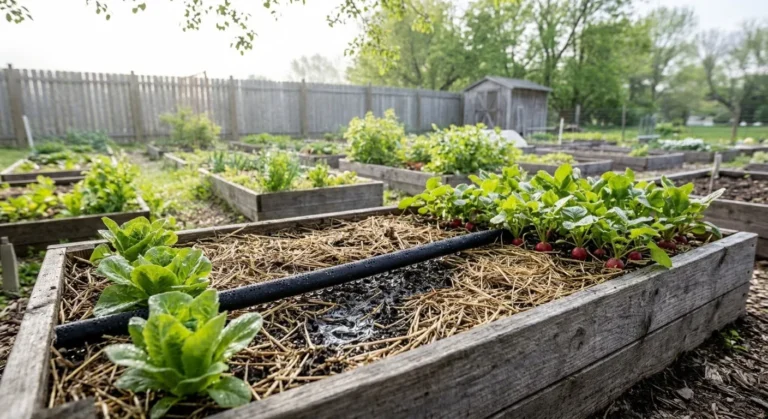
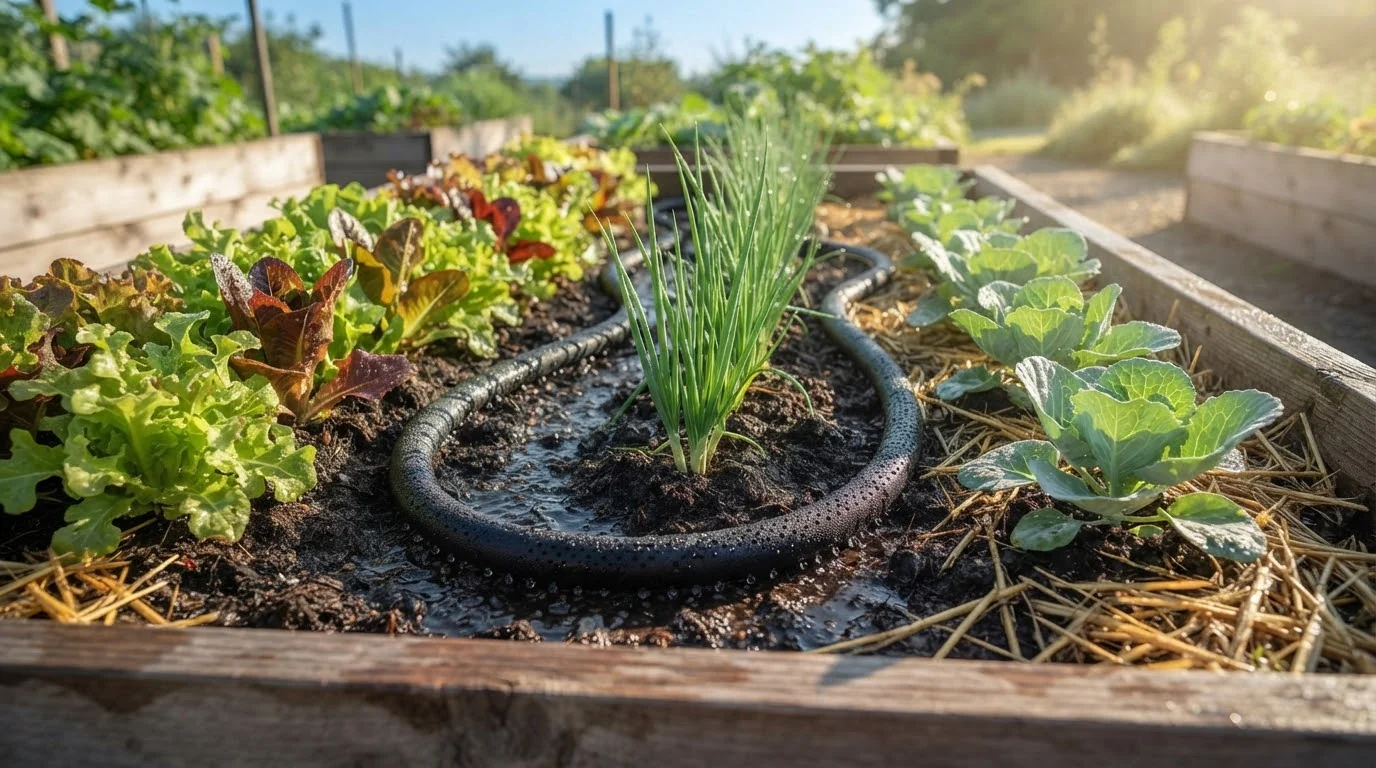
- Snake hoses through beds about 30 to 45 cm apart, closer in sandy soil, and pin them with landscape staples.
- Cover with mulch. Straw or shredded leaves over the hose reduce evaporation and protect it from sun.
- Add a timer. A battery tap timer keeps watering consistent when you are away.
How long to run them
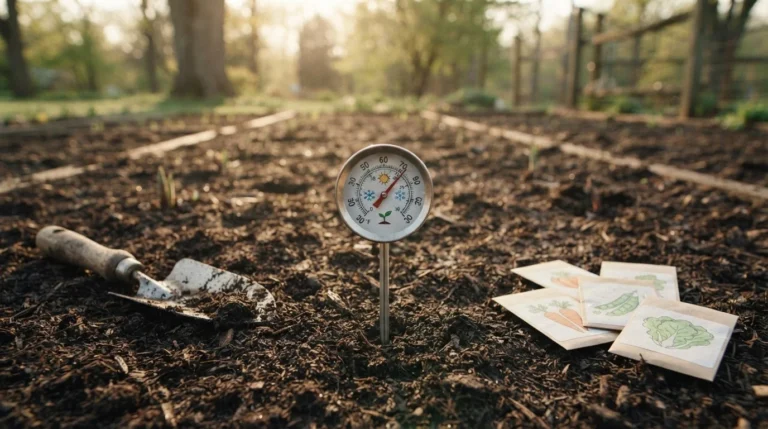
Most vegetables need about 2.5 cm of water a week. Run a new soaker hose for 30 minutes, wait an hour, then dig down 10 to 15 cm with a trowel. If the soil is moist at that depth, you have found your starting time. Adjust for heat, wind and the extra water squash and cucumbers need from mid-July.
Winter care
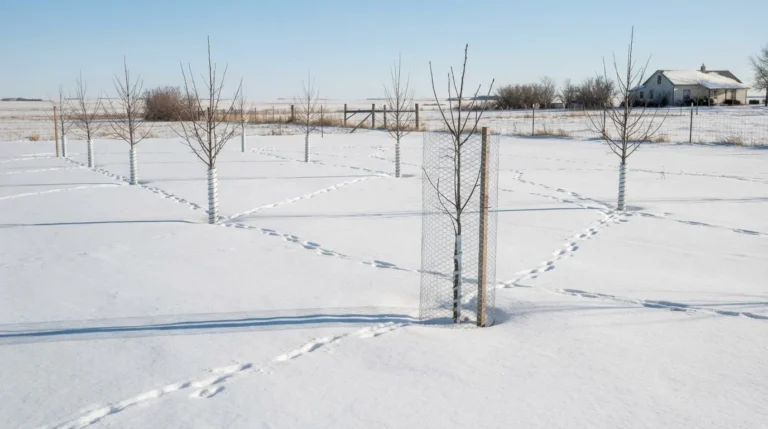
In a cold climate, soaker hoses must come in before freeze-up. Drain them, roll them loosely and store them in a shed or garage. Water left inside will split hoses and fittings when it freezes.
Planning next season? Save this guide to your Pinterest board so it is there when you need it.
Gear that helps
- Water Right soaker hose: Flexible polyurethane hose with brass fittings.
- Hose pressure regulator: Keeps soaker hoses at the low pressure they need.
- Hose tap timer: Waters on schedule while you are away.
- Landscape staples: Hold hoses in place under mulch.
As an Amazon Associate, Short Season Grower earns from qualifying purchases. Links open Amazon search results so you can compare brands, sizes and prices.
Keep reading
- How much to water a vegetable garden
- Growing cucumbers in a short season
- Growing cabbage in a cold climate
Frequently Asked Questions
Do soaker hoses need a pressure regulator?
They work much better with one. Most soaker hoses perform best at low pressure, often around 10 to 25 PSI, and spray or water unevenly at full tap pressure.
How long should I run a soaker hose?
Start with about 30 minutes, then check the soil 10 to 15 cm down. Most vegetables need around 2.5 cm of water a week.
Can soaker hoses be buried?
You can cover them with mulch, which is recommended. Burying them in soil makes leaks hard to find and can clog the pores.
Should I leave soaker hoses out in winter?
No. In a cold climate, drain them and store them indoors before freeze-up, or ice will split the hose and fittings.