Growing Cabbage in a Cold Climate: Early vs Late Types and Preventing Splits
Cabbage is one of the best crops for a cold climate. It handles cool weather and light frost, stores for weeks and comes in early types for summer salads and late types for sauerkraut and winter storage.
The short answer
- Start indoors 5 to 6 weeks before planting out.
- Plant out when days reach about 10°C and nights stay above −2°C.
- Space 30 to 45 cm apart in rows 60 to 85 cm apart.
- Use row covers against cabbage moths and flea beetles.
- Water evenly to prevent heads from splitting.
Based on the University of Saskatchewan cabbage guide.
Early or late cabbage?
| Early-season cabbage | Late-season cabbage | |
|---|---|---|
| Best for | Fresh eating, coleslaw | Storage, sauerkraut |
| Head | Smaller, tender | Larger, denser |
| Splitting | More prone | More resistant |
Growing one of each spreads the harvest from midsummer into fall. Early Jersey Wakefield and Golden Acre are classic early types; look for storage varieties for the late crop.
Starting and planting
- Sow 0.5 cm deep indoors, 2 to 3 seeds per pot; thin to one. Germination takes 5 to 6 days at 24°C.
- Give 14 hours or more of light. A good transplant is 10 to 15 cm tall and stocky.
- Harden off at least 3 days. Plant out once days are about 10°C and nights stay above −2°C; in Saskatoon usually after mid-May.
- In the far north, grow cabbage only from transplants.
Pests
Cabbage moths and flea beetles are the main pests. Install a lightweight row cover right after planting, before they find the plants. Without covers, direct-sown seedlings are often lost. Push a cutworm collar 5 cm into the soil around each transplant.
Water and splitting
Give about 2.5 cm of water a week. Heads split when heavy rain follows a dry spell and the head suddenly takes up a lot of water. Even watering prevents most splits. If a mature head is at risk, USask suggests either twisting it about a quarter turn or slicing through the roots on one side with a spade to slow growth.
Harvest
- Cut when the head is firm and dense and the size you want.
- Use a sharp knife near the base. For big heads, loosen the soil and pull the whole plant, then cut.
- Do not leave mature heads too long; they split.
- Harvest split heads right away, trim and use them.
Storage
In the fridge, cabbage keeps a few weeks to a month near 0°C with high humidity. For longer storage, ferment it into sauerkraut or freeze it.
Varieties for cold climates
- Early types (about 55 to 70 days from transplant): Golden Acre, Copenhagen Market, Early Jersey Wakefield (pointed heads). Best for summer salads and coleslaw.
- Storage and sauerkraut types (about 85 to 110 days): Danish Ballhead and Late Flat Dutch. Dense heads that hold in the field and keep for weeks.
- Red cabbage: Ruby Ball and Red Express. Red types are often slightly hardier and resist pests a little better.
- Savoy: crinkled leaves, very cold tolerant and excellent cooked.
Common cabbage problems
| Problem | Likely cause | Fix |
|---|---|---|
| Heads splitting | Heavy rain or watering after a dry spell | Water evenly; twist mature heads a quarter turn to break some roots |
| Plants bolting instead of heading | Transplants exposed to a long cold spell | Plant out after the worst cold; protect young plants |
| Wilting, stunted plants | Cabbage root maggot | Row cover or collars at planting |
| Holes and green caterpillars | Imported cabbageworm | Row cover; hand-pick; Bt |
| Loose, small heads | Heat stress, drought or poor soil | Mulch, water steadily, add compost |
Making sauerkraut from the harvest
Late cabbage is ideal for sauerkraut: shred the heads, mix with about 2% salt by weight, pack tightly into a crock or jar and keep it under its own brine at cool room temperature for three to six weeks. It is one of the oldest ways northern gardeners kept vegetables through winter, and it keeps for months in the fridge.
Planning next season? Save this guide to your Pinterest board so it is there when you need it.
Gear that helps
- Fine insect netting: A fine mesh barrier against flea beetles, cabbage moths and carrot flies, and it lets rain through.
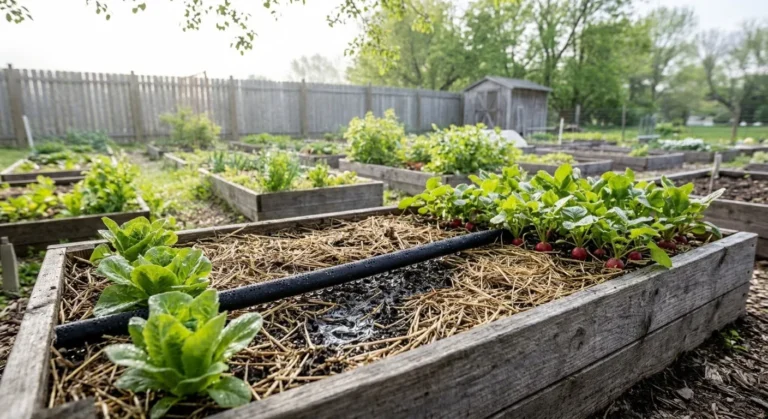
- Soaker hose: Waters the soil, not the leaves, which helps prevent disease and wastes less water.
- Hose timer: Keeps watering regular while you are away. Uneven watering is what makes cabbages split and carrots crack.
As an Amazon Associate, Short Season Grower earns from qualifying purchases. Links open Amazon search results so you can compare brands, sizes and prices.
Keep reading
- Growing broccoli in a short season
- Growing kale in a cold climate
- How to store vegetables over winter
Frequently Asked Questions
When should cabbage be planted outside?
When daytime temperatures reach about 10°C and nights stay above −2°C for several nights in a row.
Why do cabbage heads split?
Usually heavy rain after a dry spell. Even watering prevents most splitting, and mature heads should not be left too long.
Which cabbage stores best?
Late-season types store best and resist splitting. Early types are better for fresh eating.
How do I protect cabbage from worms?
Cover plants with a lightweight row cover right after planting, before cabbage moths lay their eggs.
What cabbage is best for storage?
Late, dense varieties such as Danish Ballhead and Late Flat Dutch store best. Red cabbage also keeps well.
How do I stop mature cabbage heads from splitting?
Water evenly. If heavy rain is coming, twist the head a quarter turn or cut into the roots with a spade on one side to slow water uptake.