
Growing Kale in a Cold Climate: From Spring Transplants to Fall Frost
Kale is about as close to foolproof as a cold-climate vegetable gets. Mature plants shrug off frost, one planting can be picked from early summer until snow, and it grows well from either seed or transplants. Here is how to get the most out of it in a short season.
The short answer
- Transplants: start indoors 5 to 6 weeks before planting out (about the first week of April for a mid-May last frost).
- Plant out when days reach about 10°C and nights stay above −2°C.
- Direct seed in early spring for baby leaves and resow a few times.
- Use row covers right after planting to keep flea beetles off.
- Pick outer leaves and leave the centre growing for a harvest that lasts until hard frost.
Based on the University of Saskatchewan kale guide.
Transplants or seed?
Both work. Transplants give big plants early; direct seeding is easy and ideal for tender baby leaves. In the far north, USask recommends transplants for full-size plants and direct seeding for small leaves.
Starting kale indoors
- Sow 0.5 cm deep, 2 to 3 seeds per pot, and thin to the strongest.
- Seeds sprout in 5 to 6 days at 24°C.
- Give at least 14 hours of light and run a fan for sturdy stems.
- Begin feeding once true leaves appear.
- Harden off at least 3 days before planting out.
Direct seeding
Sow 1 cm deep, about 3 cm apart in rows 30 cm apart, then thin to about 15 cm. USask suggests waiting until mid-June to thin, because insects often take some seedlings. Resow every few weeks for a steady supply of baby kale.
Spacing
Transplants can go about 15 cm apart in rows 30 cm apart for leaf picking; give them more room if you want big plants. In containers, use at least 8 litres per plant.
Varieties
North Dakota State University recommends Black Magic, Dazzling Blue, Red Russian, Vates, White Russian and Winterbor for prairie conditions. Lacinato types and Red Russian are especially tender; Winterbor and curly types are among the hardiest late in the season.
Pests: flea beetles and cabbage moths
Tiny holes in the leaves are flea beetle damage. Green caterpillars are the larvae of white cabbage moths. The best non-chemical defence for both is a lightweight row cover installed right after planting, before the insects find the plants. This matters most near canola fields. Remove mustard-family weeds nearby, and use a cutworm collar around transplants if cutworms have been a problem.
Water and feed
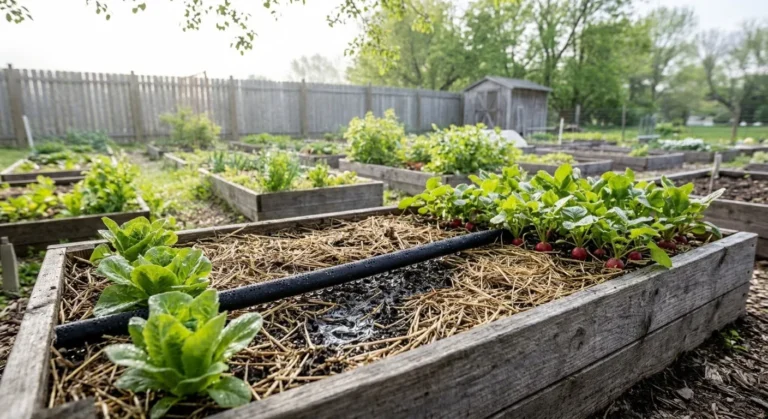
About 2.5 cm of water a week gives the biggest, most tender leaves. Kale survives dry spells but grows smaller and tougher. Mulch heavily to hold moisture and reduce weeding.
Harvesting all season
- Pick a few of the oldest outer leaves from each plant, leaving the centre to keep growing.
- Young leaves are the most tender.
- Mature kale tolerates frost well, so keep picking into late fall. Young transplants are less hardy, so protect them from late spring frosts.
Storage
Kale keeps a few weeks in the fridge, ideally just above 0°C with high humidity: a vegetable bag with a paper towel works well. Blanch and freeze it for winter use.
Gear that helps
- Fine insect netting: A fine mesh barrier against flea beetles, cabbage moths and carrot flies, and it lets rain through.
- Garden hoops for row covers: Hold covers above the plants so the fabric does not rub leaves or press on seedlings.
- Soaker hose: Waters the soil, not the leaves, which helps prevent disease and wastes less water.
As an Amazon Associate, Short Season Grower earns from qualifying purchases. Links open Amazon search results so you can compare brands, sizes and prices.
Keep reading
Frequently Asked Questions
When should I plant kale outside?
Plant transplants out when daytime temperatures reach about 10°C and nights stay above −2°C. In Saskatoon that is usually after mid-May.
Is kale frost tolerant?
Mature kale tolerates frost well and can be harvested into late fall. Young transplants are less hardy.
What is eating holes in my kale?
Small round holes are usually flea beetles. Cover plants with a lightweight row cover right after planting.
How do I harvest kale so it keeps growing?
Pick a few outer leaves from each plant and leave the centre leaves to keep growing.