Cold Frame Gardening: A Beginner’s Guide for Northern Gardens
A cold frame is the cheapest way to add weeks to a short growing season. It is just a low box with a clear lid, but it traps the sun’s heat, blocks the wind and keeps the soil warmer than the open garden. In a northern climate, that can mean salad greens in April and spinach into November.
The short answer
- A cold frame is a bottomless box with a clear, sloped lid that faces the sun.
- It extends the season by about 2 to 4 weeks in both spring and fall, according to Iowa State University Extension.
- Venting is the most important job. Open the lid when it gets to about 29°C (85°F) inside and close it before sunset.
- Best uses: early greens and radishes, hardening off seedlings, and a fall crop of cool-season vegetables.
Where to put a cold frame
- Face it south. A south-facing frame gets the most winter and spring sun. South Dakota State University Extension also suggests south or west.
- Back it against something. Placing the north side against a house, garage or fence cuts heat loss and wind.
- Choose well-drained ground. Avoid low spots where snowmelt or rain collects.
- Keep water close. You will water more than you expect, because rain cannot reach inside.
Size and shape
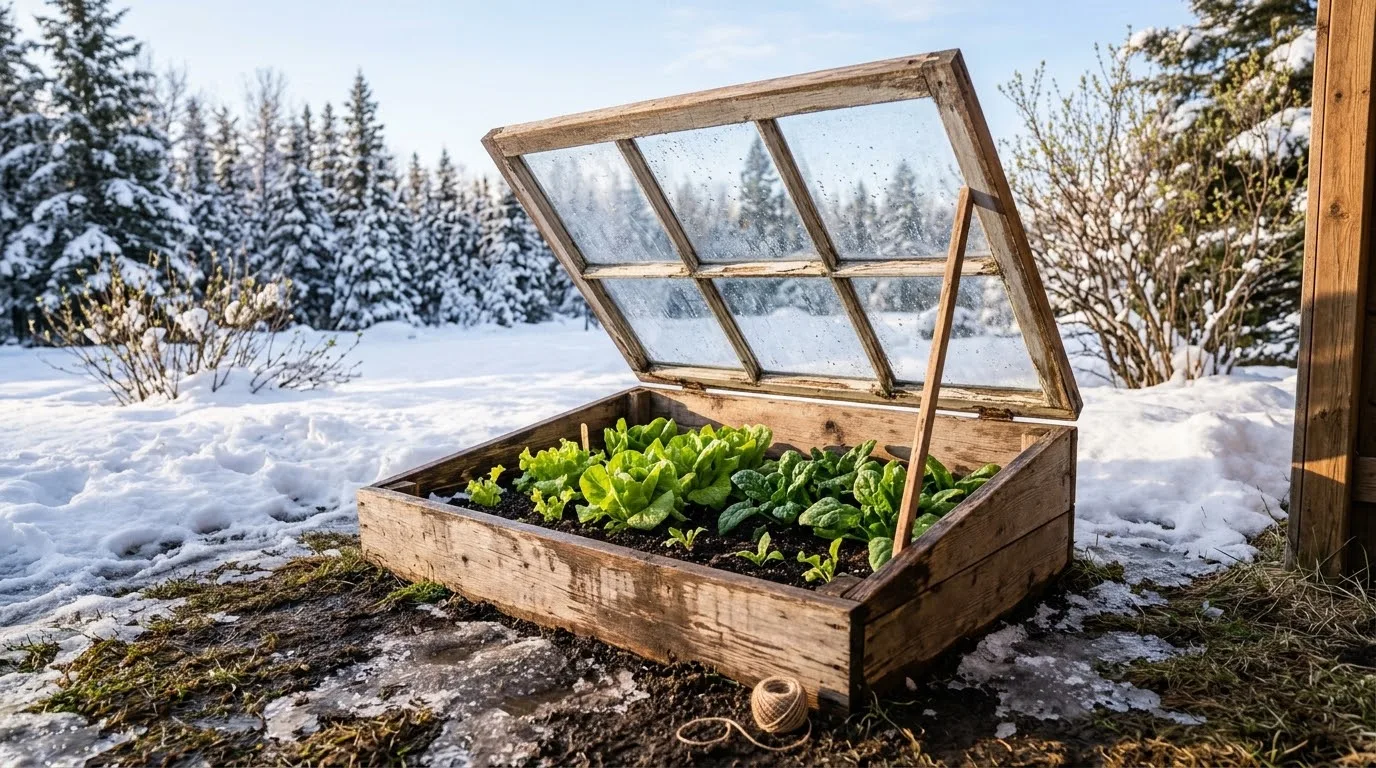
Iowa State recommends keeping the frame no deeper than about 90 cm (3 ft) from front to back, so you can reach the back without climbing in. A good starting shape is about 30 cm (12 in) tall at the front and 45 cm (18 in) at the back. SDSU Extension describes the ideal slope as about 10 to 15 degrees. The slope catches more low-angle sun, sheds rain and makes snow easier to clear.
Materials
- Frame: untreated lumber is most common. Brick, concrete block, plastic lumber and even straw bales also work. Painting the outside white reflects light; painting the inside black absorbs heat.
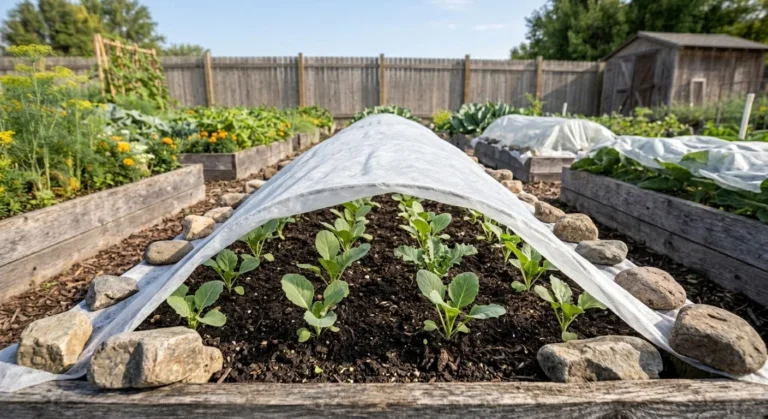
- Lid: an old storm window or glass shower door, twin-wall polycarbonate, rigid plastic panels or clear polyethylene film on a wooden frame. Hinge it at the back so it is easy to prop open.
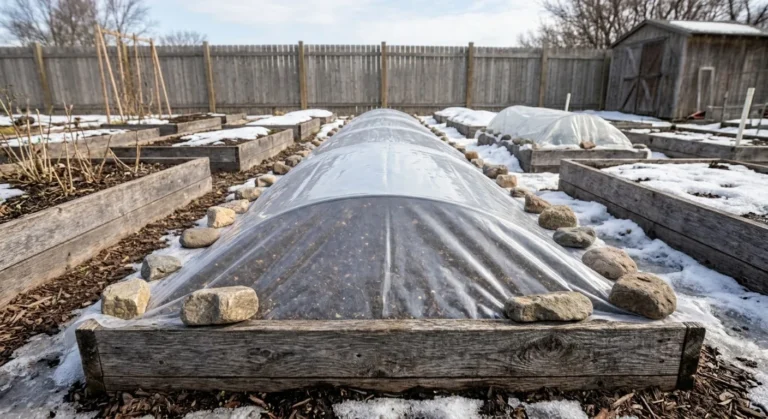
- Seal the gaps. Drafts undo much of the benefit. Weigh the edges down with bricks or sandbags so wind cannot lift the frame.
Kit cold frames are also sold in portable, collapsible versions if you do not want to build one.
Venting: the part most people get wrong
A closed cold frame heats up fast. Colorado State University Extension warns that temperatures under a closed cover can climb above 54°C (130°F) within about an hour of sun, even when it is cold outside. That cooks seedlings.
- Prop the lid open when the air inside reaches about 29°C (85°F).
- Close it in late afternoon, before the air starts to cool, to trap the day’s heat for the night.
- Check even on cloudy days. Temperatures change quickly when the sun breaks through.
- Keep a thermometer inside. An automatic vent opener, a wax-filled cylinder that lifts the lid as it warms, takes most of the work out of venting.
How to use a cold frame through the year
Early spring
Sow cool-season crops 2 to 4 weeks before you could sow them in the open garden: lettuce, spinach, arugula, radishes, Asian greens. Close the lid a week or so beforehand to warm the soil.
Hardening off
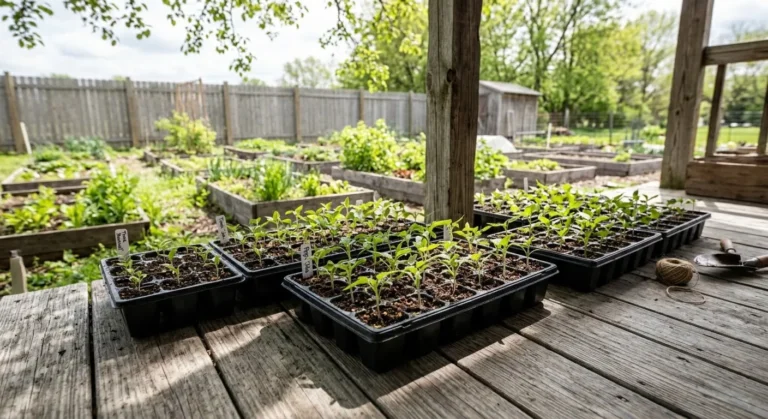
A cold frame is the easiest place to harden off seedlings you started indoors. Move tomatoes, peppers and flowers into the frame, open the lid more each day, and close it on cold nights. It saves carrying trays in and out of the house.
Fall
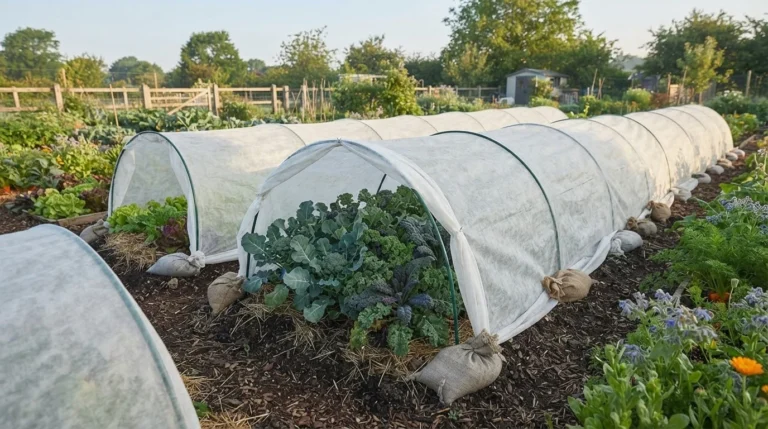
Sow spinach, lettuce, kale and radishes in late summer with the lid off. As nights get colder, close the frame at night. Iowa State reports harvests continuing into November in most years. In the coldest regions, add a light layer of mulch or bank straw bales against the frame as nights drop.
Winter
Keep the lid closed more often and brush off snow so light can reach the plants. Some gardeners leave carrots and other roots in the frame and dig them during thaws.
Best crops for a cold frame
SDSU Extension notes that cool-season vegetables grow best with air at about 10 to 27°C (50 to 80°F). Good choices:
- Leafy greens: lettuce, spinach, arugula, kale, Asian greens
- Roots: radishes, carrots, beets, turnips
- Peas and brassica seedlings (broccoli, cabbage, cauliflower)
Many of these appear on our list of fast-maturing vegetables for a short season.
Cold frame or hotbed?
A hotbed is a cold frame with a heat source, usually a buried soil-heating cable or a deep layer of fresh manure covered with soil. It warms the soil enough to start warm-season crops earlier, but it costs more and takes more work. For most gardeners, a plain cold frame is the better first step.
Planning next season? Save this guide to your Pinterest board so it is there when you need it.
Gear that helps
- Cold frame kit: A ready-made frame is the quickest way to start greens weeks early.
- Automatic vent opener: Opens the lid on sunny days without electricity, so plants do not overheat while you are away.
- Min/max garden thermometer: Records the coldest overnight temperature, so you learn how your yard compares with the nearest weather station.
As an Amazon Associate, Short Season Grower earns from qualifying purchases. Links open Amazon search results so you can compare brands, sizes and prices.
Keep reading
- How to start seeds indoors in a cold climate
- 25 fast-maturing vegetables for a short growing season
- When to plant tomatoes in zone 3
Frequently Asked Questions
How much does a cold frame extend the growing season?
About 2 to 4 weeks in both spring and fall, according to Iowa State University Extension. Adding insulation or a heat source can stretch it further.
When should I open a cold frame?
Open the lid when the air inside reaches about 29°C (85°F), and close it in late afternoon before the air cools. On sunny days a closed frame can overheat within an hour.
Which direction should a cold frame face?
South, for the most sun. Put the taller back side to the north, ideally against a wall or fence to block wind.
What can I grow in a cold frame?
Cool-season crops such as lettuce, spinach, arugula, kale, radishes, carrots and beets. It is also ideal for hardening off tomato and pepper seedlings.
Can I use an old window for a cold frame?
Yes. An old storm window or glass shower door makes a good lid. Hinge it at the back so you can prop it open for venting.