Growing Cauliflower in a Cold Climate: Timing, Blanching and Avoiding Problems
Cauliflower has a reputation as the fussiest member of the cabbage family, and it is deserved. It wants steady, cool, even growth; any stress, from cold soil to a heat wave, can ruin the head. The upside is that a cool northern summer is close to what it likes.
The short answer
- Start indoors 5 to 6 weeks before planting out.
- Plant out when days reach about 10°C and nights stay above −2°C.
- Space 30 to 45 cm apart, rows 60 to 85 cm apart.
- Keep growth steady: even water, no excess nitrogen.
- Tie outer leaves over the head (blanching) to keep it white.
Based on the University of Saskatchewan cauliflower guide.
Why cauliflower fails, and how to avoid it
- Bolting: planting into cool soil can make plants bolt instead of forming a head. Wait for the soil to warm and harden off properly.
- Loose, separated heads: extreme summer heat or too much nitrogen fertilizer cause the curd to break apart.
- Small heads: usually not enough water. Cauliflower needs regular moisture for a good-sized head.
The common thread is consistency. Anything that checks growth shows up in the head.
Starting and planting
- Sow 0.5 cm deep indoors, 2 to 3 seeds per pot, thinned to one. Germination: 5 to 6 days at 24°C.
- 14 hours or more of light, a fan for sturdy stems, and light feeding once true leaves appear.
- Plant out at 10 to 15 cm tall, not root-bound, after at least 3 days of hardening off.
- Cover the root plug completely so the potting mix does not wick water away.
Varieties
North Dakota State University recommends Amazing, Snow Crown, Cheddar (orange) and Violet Queen (purple) for prairie conditions. For white heads with less work, choose self-blanching varieties with large leaves that wrap the curd.
Blanching
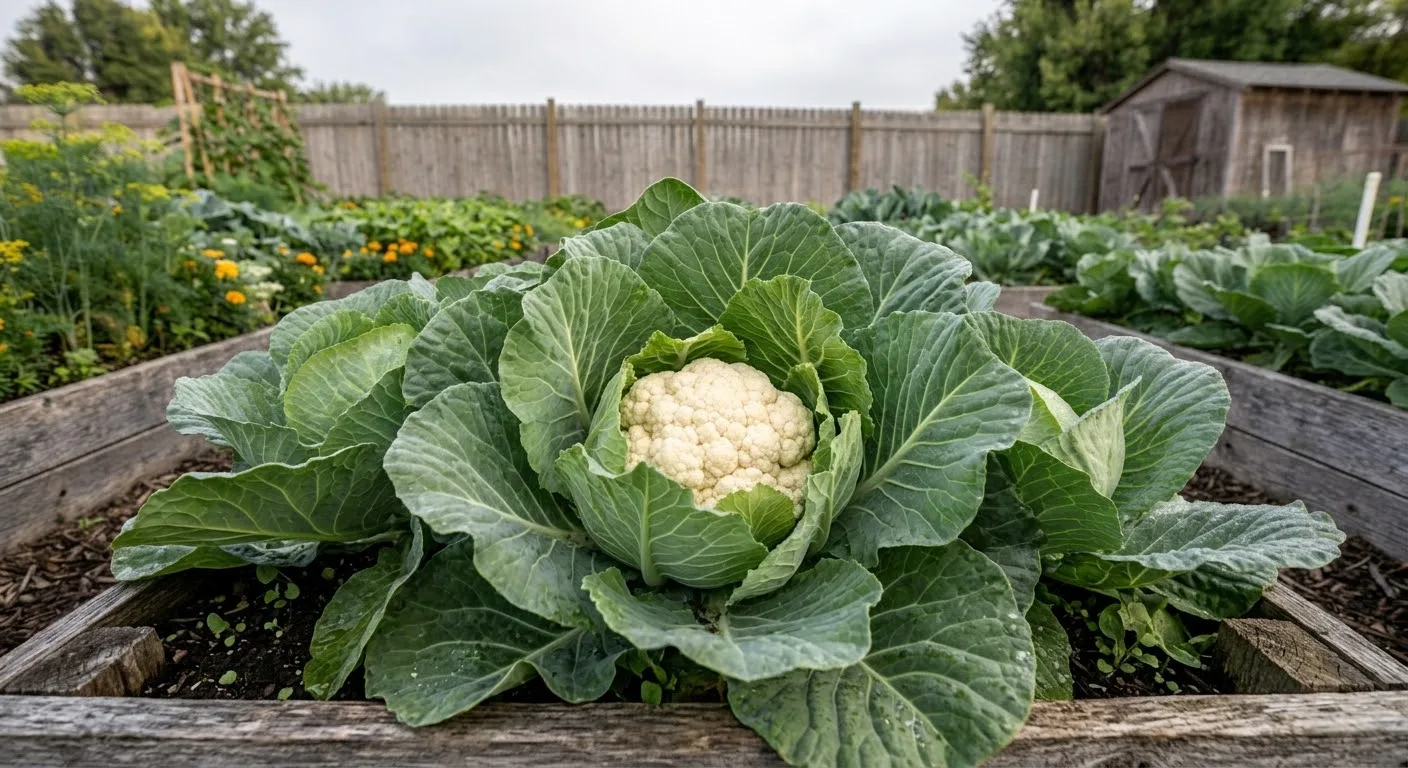
Sunlight turns white curds yellow or greenish and can change the flavour. When the head is a few centimetres across, pull the outer leaves up over it and tie them loosely with string or a rubber band. If the leaves are too short, wrap the head in newspaper. Coloured varieties do not need blanching.
Pests
Like all brassicas, cauliflower attracts cabbage moths and flea beetles. Put a row cover on right after planting, use cutworm collars, remove mustard-family weeds and rotate where you plant brassicas each year.
Water
About 2.5 cm of water a week in well-drained soil, steadily through the season.
Harvest
Cut when the head is firm, dense and the size you want, before the curds start to loosen. Keep a few outer leaves attached to protect the head. Cauliflower keeps a few weeks in the fridge near 0°C with high humidity, and freezes well after blanching.
Keep reading
Frequently Asked Questions
Why did my cauliflower not form a head?
Stress such as planting into cool soil can make cauliflower bolt instead of heading. Keep growth steady and harden off transplants well.
How do I keep cauliflower white?
Tie the outer leaves over the head when it is a few centimetres across, or grow self-blanching varieties.
Why is my cauliflower head loose?
Extreme heat or too much nitrogen fertilizer can cause the curd to separate.
When should cauliflower be planted outside?
When days reach about 10°C and nights stay above −2°C for several nights.