Growing Peas in a Cold Climate: Sowing, Support and Harvest
Peas are one of the first crops you can sow in spring, and one of the best reasons to have a garden at all: nothing from the store compares to peas eaten minutes after picking. They like cool weather, which makes them a natural fit for a short northern season.
The short answer
- Sow directly once the soil is at least 10°C, which can be 1 to 2 weeks before your last frost.
- Sow 2.5 to 5 cm deep, 5 to 7 cm apart, in rows about 45 cm apart. No thinning needed.
- Do not soak the seed; soaked seed rots in cool soil.
- Sow every 2 weeks until mid-June. Harvest about 3 weeks after flowering.
Based on the University of Saskatchewan pea guide.
Types of peas
| Type | What you eat | Varieties for prairie climates (NDSU, via USask) |
|---|---|---|
| Shelling | The peas only | Early Frosty, Green Arrow, Knight, Lincoln, Little Marvel, Maestro Improved, Wando |
| Snap | Whole fat pod | Sugar Ann, Super Sugar Snap |
| Snow | Whole flat pod | Oregon Giant, Oregon Sugar Pod II, Sweet Horizon |
Peas take roughly 56 to 80 days. In the far north, choose varieties under about 55 days.
Sowing
- Wait for soil at 10°C. Below 5°C, seed can rot; at 5 to 10°C, germination takes about two weeks.
- Do not pre-soak. It does more harm than good in cool or dry soil.
- In a new garden that has never grown peas, a pea inoculant helps the plants fix nitrogen.
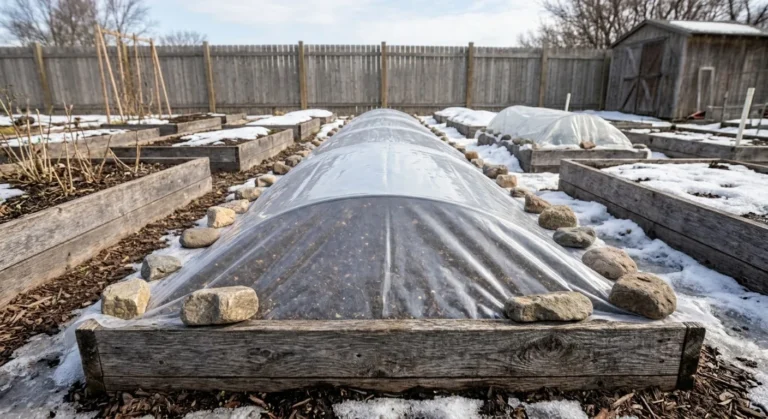
- Raised beds and clear plastic laid on the soil after snowmelt (removed before sowing) warm the soil sooner.
Support
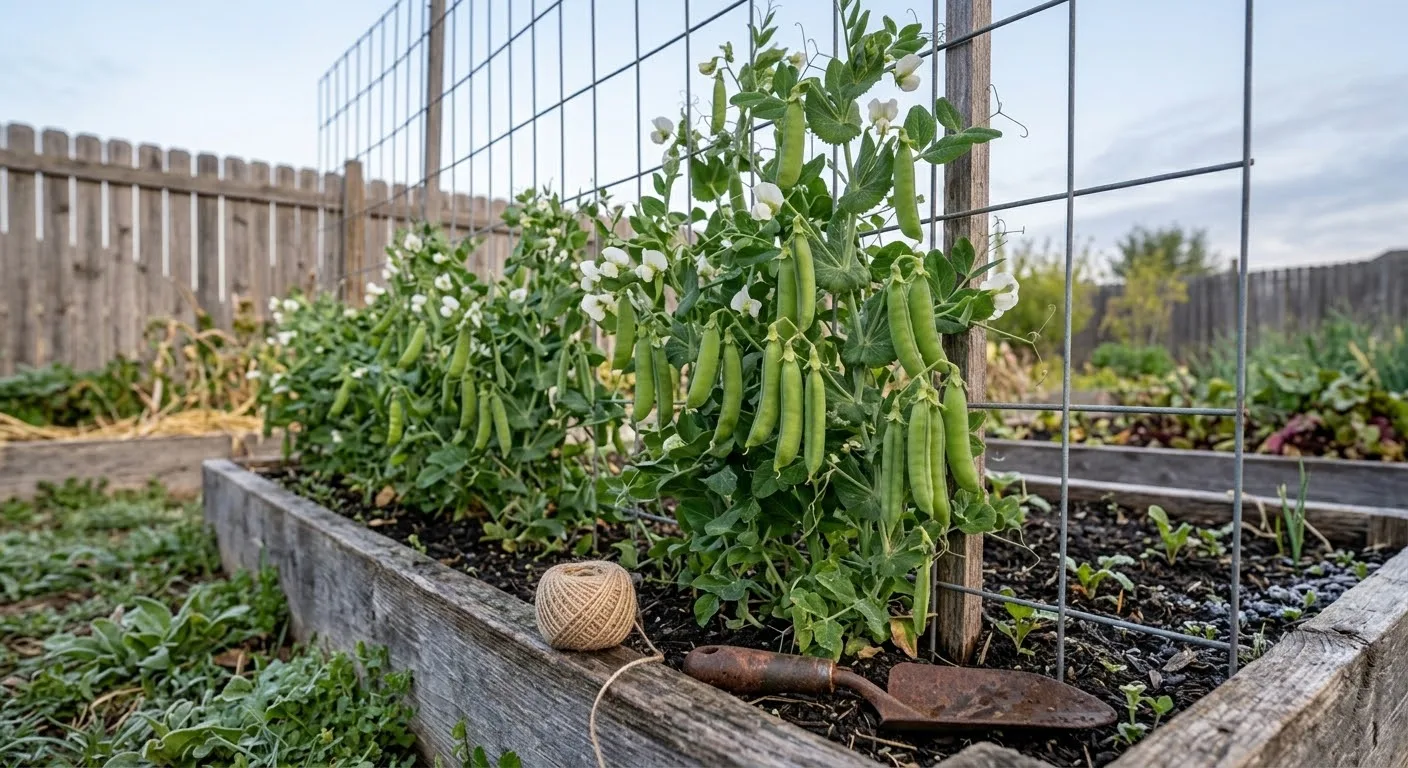
Tall varieties need a trellis or fence. Even short bush types do better with light support such as chicken wire or twiggy branches pushed into the soil; it keeps pods off the ground and makes picking easier.
Water
About 2.5 cm a week, and especially during and after flowering, when dry soil cuts the harvest. Mulch to keep the soil cool and moist.
Harvest
- Start checking about 3 weeks after flowering, and pick often, even daily.
- Shelling peas: when pods are full but before the peas turn starchy.
- Snap peas: when pods are plump and crisp. Snow peas: while pods are still flat.
- Pick in the cool of the morning, holding the vine with one hand so you do not tear it.
- Chill right away. Peas lose sweetness fast in warm temperatures.
Powdery mildew
Late-planted peas are more prone to powdery mildew. Choose resistant varieties, avoid crowding, water early in the day and mulch to reduce splashing.
Inoculant: worth it?
Peas form a partnership with soil bacteria that fix nitrogen from the air. If peas have not grown in your garden for a few years, coating the seed with a pea and bean inoculant just before sowing can improve growth. It is inexpensive and harmless. In soil where peas grow regularly, the bacteria are usually already present.
Common pea problems
| Problem | Likely cause | Fix |
|---|---|---|
| Seeds rotted, few seedlings | Cold, wet soil or soaked seed | Wait for 10°C soil; do not soak |
| Yellowing, poor growth | Root rot in poorly drained soil | Raised beds; rotate crops |
| Flowers but few pods | Heat stress in July | Sow early; choose early varieties |
| Seedlings nipped off | Birds or rabbits | Cover with netting or row cover until established |
| White powder on leaves | Powdery mildew | Resistant varieties; good air flow |
A fall crop of peas
Peas can also be sown in early to mid-July for a fall harvest, though results vary because seedlings struggle in midsummer heat. Choose a fast, mildew-resistant variety, sow into moist soil and shade the row until seedlings emerge. Light frosts in September do not hurt the plants.
Keeping the harvest
Peas lose sweetness quickly after picking as their sugar turns to starch. Pick in the morning, chill right away and eat or freeze them the same day. To freeze, shell and blanch for about 90 seconds, cool in ice water, drain and freeze in bags. Snap and snow peas can be frozen whole after blanching.
Planning next season? Save this guide to your Pinterest board so it is there when you need it.
Gear that helps
- Garden trellis netting: Gets vining crops off the ground, where they get more sun and air and are easier to pick.
- Garden twine: For tying peas, beans and tall plants to their supports.
- Soil thermometer: Soil temperature, not the calendar, tells you when seeds will actually sprout.
As an Amazon Associate, Short Season Grower earns from qualifying purchases. Links open Amazon search results so you can compare brands, sizes and prices.
Keep reading
Frequently Asked Questions
When should I plant peas?
Once the soil is at least 10°C, which can be one to two weeks before your last spring frost.
Should I soak pea seeds before planting?
No. Soaked seed can rot in cool soil and germinates poorly in dry soil.
How deep do you plant peas?
About 2.5 to 5 cm deep, 5 to 7 cm apart, in rows about 45 cm apart.
When are peas ready to pick?
About three weeks after flowering. Pick shelling peas when the pods are full but before the peas turn starchy.
Should I use inoculant on pea seeds?
It helps where peas have not grown for a few years. Coat the seed just before sowing; it is inexpensive and harmless.
How do I freeze fresh peas?
Shell them, blanch for about 90 seconds, cool in ice water, drain and freeze in bags the same day you pick them.