How to Keep Flea Beetles and Cabbage Worms Off Brassicas with Row Covers
If you grow cabbage, broccoli, kale, radishes or turnips, you have probably met flea beetles and cabbage worms. In the Prairies, where canola fields host huge numbers of both, they can wipe out young plants in days. The single most effective, chemical-free answer is a lightweight fabric row cover put on at the right time.
Know the pests
| Pest | Damage | When |
|---|---|---|
| Flea beetles | Many tiny round holes in leaves; seedlings can be killed | Spring and early summer, on young plants |
| Cabbage moths and cabbage worms | White moths lay eggs; green caterpillars chew large holes and tunnel into heads | Early summer onward |
| Cutworms | Young transplants cut off at soil level overnight | Right after planting |
Why row covers work
A floating row cover is a light, white spun fabric that lets sunlight, air and rain through but keeps insects out. If the plants are covered before the pests find them, flea beetles cannot feed and cabbage moths cannot lay eggs. The University of Saskatchewan guides for broccoli, kale, cabbage and radishes all recommend the same thing: install covers soon after planting, before insects arrive, and especially near canola fields.
How to use row covers for brassicas
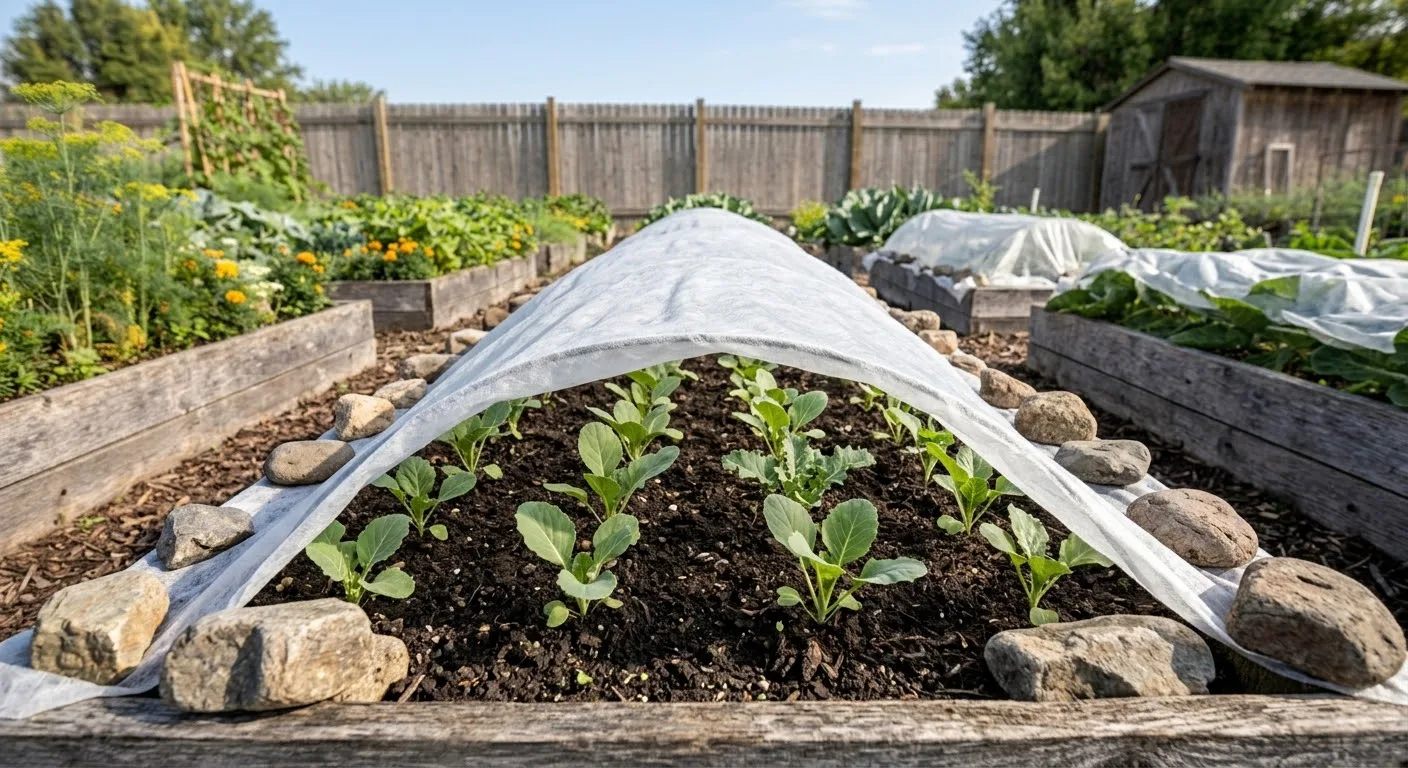
- Cover on day one. Put the fabric on right after you sow or transplant. Covering after the beetles are already there traps them inside.
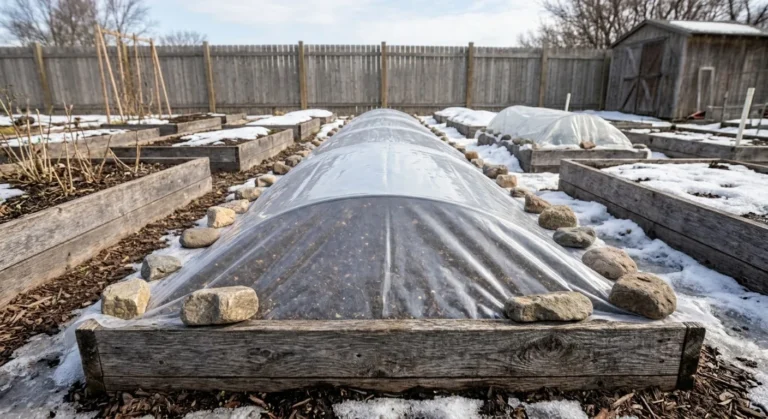
- Use hoops. Wire or plastic hoops hold the fabric above the plants so it does not rub leaves, and leave room to grow.
- Seal every edge. Bury the edges in soil or weigh them down along the whole length. Pests find any gap.
- Leave it on. Brassicas do not need insects for pollination (we eat the leaves, heads or roots), so covers can stay on most of the season. Lift them only to weed and harvest, and close them right away.
- Rotate. Flea beetles and some other pests overwinter in the soil. If you cover a bed where brassicas grew last year, pests can emerge under the cover. Move brassicas to a new spot each year.
Other things that help
- Cutworm collars: a toilet paper roll or a can with both ends removed, pushed at least 5 cm into the soil around each transplant.
- Weed control: wild mustard, shepherd’s purse and other mustard-family weeds attract the same insects. Pull them.
- Healthy transplants: strong plants outgrow light flea beetle damage. Water well and plant at the right time.
- Hand-picking: check under leaves for green caterpillars and pick them off if any get through.
A bonus: frost and wind protection
The same fabric holds in a little warmth, protects young plants from late spring frosts and blocks drying prairie wind. One investment covers several problems.
Keep reading
- Growing broccoli in a short season
- Growing cabbage in a cold climate
- Growing kale in a cold climate
- Growing radishes in spring and fall
Frequently Asked Questions
When should I put row covers on brassicas?
Right after sowing or transplanting, before flea beetles and cabbage moths find the plants.
Can row covers stay on all season?
For brassicas, yes. They do not need insect pollination, so lift the cover only to weed and harvest.
Why do I still have flea beetles under my row cover?
They may have overwintered in the soil where brassicas grew last year, or found a gap. Rotate crops and seal every edge.
What are the tiny holes in my kale and radish leaves?
Usually flea beetle feeding. Young plants are most at risk.