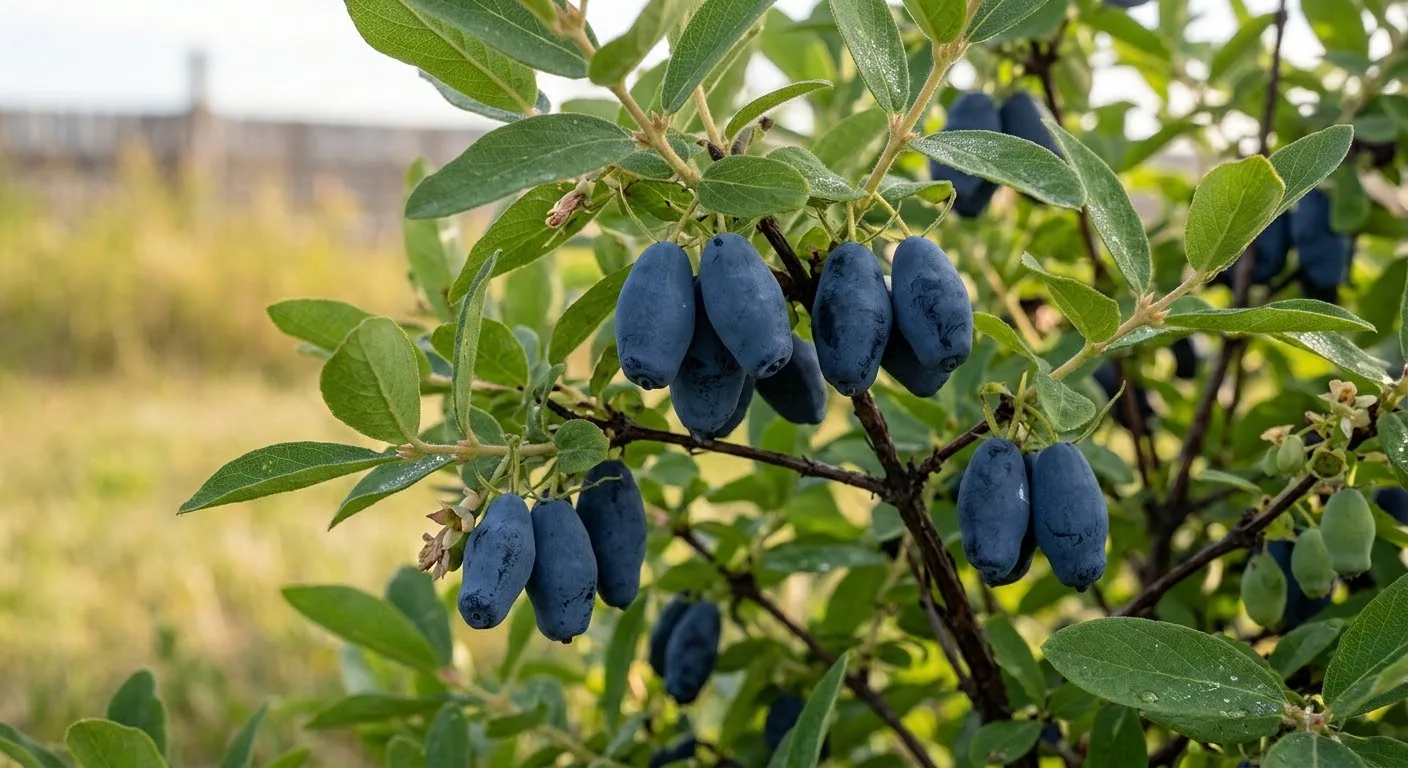
Growing Haskap Berries: The Hardiest Fruit for Cold Climates
Haskap, also called honeyberry, may be the perfect fruit for a cold climate. It is hardy to the coldest zones, flowers before almost anything else in spring, and gives you ripe berries in late June, weeks before strawberries. The taste sits somewhere between blueberry and raspberry, and the shrubs need very little care.
The short answer
- Haskap is hardy to roughly zone 1 to 4 and needs no winter protection.
- Plant at least two compatible varieties that bloom at the same time. A single bush will not fruit well.
- Space shrubs at least 1 m apart in full sun.
- Berries ripen in late June to early July. Taste before picking: they turn blue days before they are ripe inside.
- Net them. Birds love haskap.
Based on the University of Saskatchewan haskap guide.
Choosing varieties
Haskaps cannot pollinate themselves. You need two different varieties whose bloom times overlap, and bees to carry the pollen. Both plants produce fruit. The University of Saskatchewan fruit program, which bred many of the best-known varieties, publishes compatibility charts; buy pairs your nursery says are compatible.
| Variety | Berry size | Flavour | Shrub |
|---|---|---|---|
| Aurora | 2.17 g (large) | Sweet | Large, fast growing |
| Honeybee | 1.9 g | Tart | Large, holds fruit well |
| Borealis | 1.62 g | Sweet, tangy | Average; good fresh |
| Tundra | 1.49 g | Sweet, tart | Average; firm fruit |
| Indigo Treat | 1.41 g | Sweet | Average |
| Indigo Gem | 1.30 g | Sweet, tangy | Average |
Older Russian types such as Blue Bell, Berry Blue and Cinderella ripen earliest but have small, often tart berries.
Planting
- Site: full sun gives the most fruit. Haskap grows in part sun but yields less.
- Soil: well-drained loam or sandy loam is best; clay is fine if it drains.
- Depth: plant 2.5 to 5 cm deeper than the plant sat in its pot.
- Spacing: at least 1 m apart. Mature shrubs grow 1.2 to 2 m tall and about 1.2 m wide.
- Water to keep the soil moist for the first 2 to 3 weeks. Add a thin layer of compost and mulch, but no chemical fertilizer at planting.
Care
- Water about 2.5 cm a week the first couple of years; established shrubs need little.
- Feed with compost each spring.
- Keep grass about 1 m back from the stems; the roots are wide and shallow.
- Prune rarely: remove dead wood and a few crowded base branches in late fall or winter. Old, unproductive shrubs can be cut to about 15 cm and will regrow.
When to pick
This is where most people go wrong. Haskap berries turn dark blue 5 to 10 days before they are ripe inside. Bite one: if the inside is still green and tastes grassy, wait. Ripe berries are deep purple-red all the way through. Pick in the cool of the morning or evening and refrigerate quickly. Some varieties drop ripe fruit easily; you can shake berries onto a tarp.
Shrubs give a little fruit the year after planting, building to about 3 to 4.5 kg per mature bush each year.
Keeping the birds off
Birds can strip a bush in a day. Put netting up before the berries turn blue. USask recommends mesh no larger than 1.25 cm so birds and cats do not get tangled, propped on poles and weighed down at the bottom so birds cannot crawl under.
Gear that helps
- Bird netting: Birds will strip ripe berries in a day. Drape netting before the fruit colours up.
- Bypass pruning shears: Bypass blades make clean cuts that heal quickly. Anvil types crush stems.
- Soil pH test kit: Check pH before planting perennials. It is much harder to fix once they are in.
As an Amazon Associate, Short Season Grower earns from qualifying purchases. Links open Amazon search results so you can compare brands, sizes and prices.
Keep reading
Frequently Asked Questions
Do you need two haskap plants?
Yes. Haskaps are self-incompatible, so you need at least two different varieties that bloom at the same time.
When are haskap berries ripe?
Usually late June to early July. They turn blue 5 to 10 days before they are ripe inside, so bite one: ripe berries are purple-red all the way through.
How cold hardy is haskap?
Very hardy, to about zone 1 to 4. University of Saskatchewan varieties need no winter protection.
How much fruit does a haskap bush produce?
A mature bush gives about 3 to 4.5 kg of berries per year.