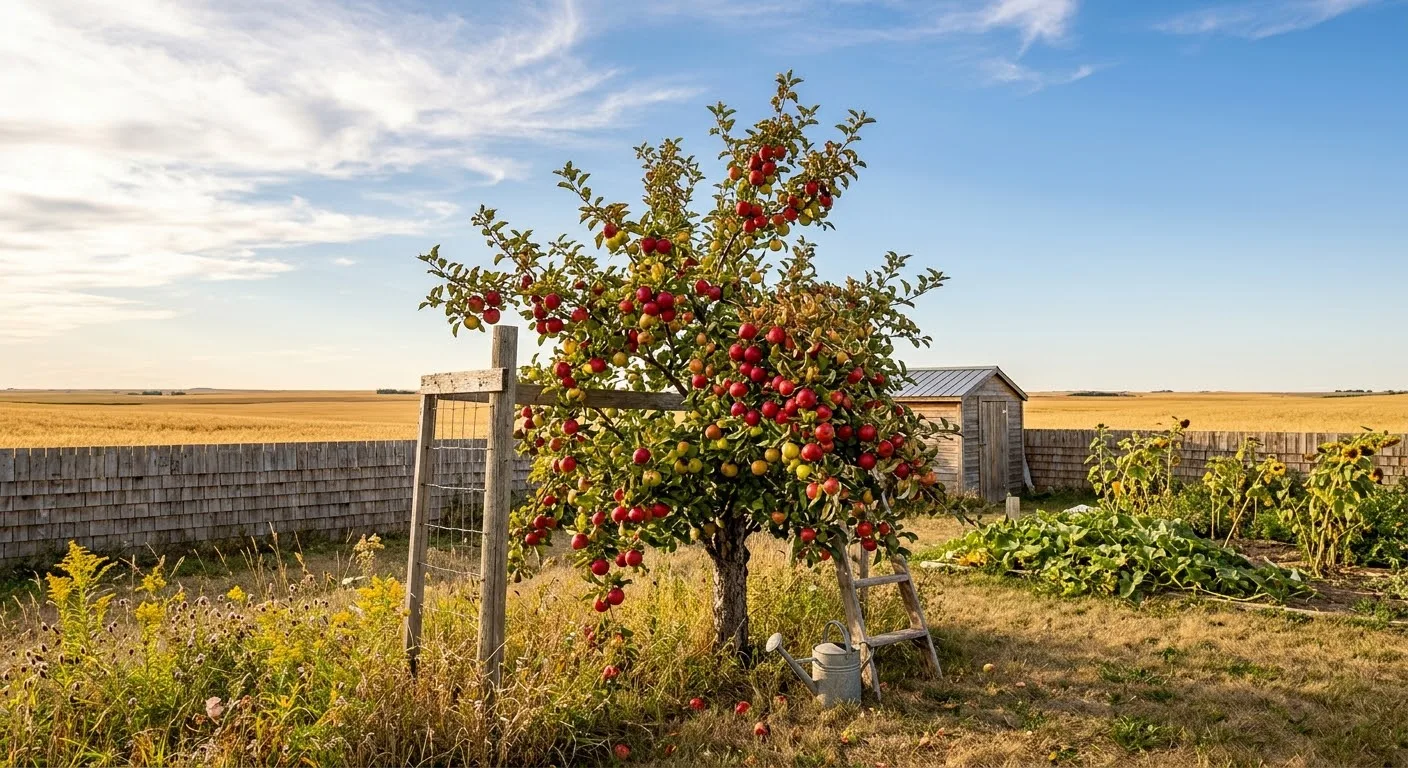
Best Apple Trees for the Prairies and Other Cold Climates
You do not need a mild climate to grow good apples. Decades of breeding at prairie research programs have produced apples that survive winters far colder than most fruit trees can take, and many of them taste excellent. The key is choosing a variety bred for the cold and giving young trees some winter protection.
The short answer
- Buy varieties recommended for the Prairies, such as Norland, September Ruby, Prairie Sensation, Harlason or the columnar TreasurRed.
- Plant two different varieties (or have a neighbour’s apple or crabapple nearby). Apples need cross-pollination.
- Expect fruit in about 4 to 5 years.
- Protect young trunks from sunscald and rodents every winter.
Variety and care information from the University of Saskatchewan apple guide.
Apple varieties for the Prairies
| Variety | Fruit size | Ripens | Storage |
|---|---|---|---|
| Norland | 6.5 cm | Early | – |
| Adanac | 5 cm | Early | Up to 12 weeks |
| September Ruby | 6.5 cm | Mid | Up to 16 weeks |
| Fall Red | 7 cm | Mid | Up to 10 weeks |
| Prairie Sensation (U of S) | 7.5 cm | Mid | – |
| Misty Rose (U of S) | 6.6–8 cm | Mid | – |
| Westland | 7–9 cm | Mid | – (good for cooking) |
| Harlason (HaralRed) | 6 cm | Late | Stores very well |
| Autumn Delight (U of S) | 6–7 cm | Late | – |
| TreasurRed (U of S) | 7–8 cm | Late | Columnar; fits small yards |
For jelly and pollination, the crabapples Dolgo and Rescue are classic prairie choices. In the far north, USask cites Klondike Valley trials listing Noret, Trailman and Rescue as ultra-hardy.
A note on late varieties
Late apples ripen in late September or early October. In a cold year they may not finish. If your season is short, favour early and mid-season varieties.
Pollination
Apples will not set fruit with their own pollen. In town, a neighbour’s apple or crabapple is usually close enough. On an acreage, plant two different varieties, or buy a tree grafted with more than one variety. In the far north, keep the two varieties within about 30 m of each other. Bloom is usually mid to late May.
Rootstock and tree size
- Ottawa 3 rootstock: a smaller tree, about 3 to 3.6 m tall.
- Siberian crab rootstock: a large, very hardy tree, about 6 to 9 m tall.
Most trees end up about two-thirds to three-quarters as wide as they are tall, so plan spacing accordingly and keep away from power lines.
Planting and first years
- Full sun; part sun means less fruit.
- Keep the soil moist for the first 2 to 3 weeks, then water about 2.5 cm a week if it does not rain.
- Spread about 2 cm of compost around the base and mulch, keeping grass and weeds about 1 m back. Do not fertilize a newly planted tree.
- Trees take up to two years to establish and about four to five to fruit.
Pruning in brief
- Year 1: choose one central leader.
- Year 2: keep 4 to 5 well-spaced scaffold branches with wide angles.
- Year 3: remove suckers, water sprouts and crossing branches.
- After that: prune lightly each year.
Thin fruit in spring so apples are about a hand’s width apart; you get bigger, better apples and less branch breakage.
Winter protection
Sunscald, rabbits and mice are bigger threats than cold for hardy varieties. Install spiral guards every fall. See our guide to protecting fruit trees from winter damage.
Harvest and storage
Prairie apples ripen from late August to early October depending on variety. Pick when the flavour suits you; twist and lift so you do not break the fruiting spur. Store at about 0°C and high humidity in perforated bags, away from vegetables.
Gear that helps
- Bypass pruning shears: Bypass blades make clean cuts that heal quickly. Anvil types crush stems.
- Spiral tree guards: Protect young trunks from mice, voles and rabbits under the snow.
- Soil pH test kit: Check pH before planting perennials. It is much harder to fix once they are in.
As an Amazon Associate, Short Season Grower earns from qualifying purchases. Links open Amazon search results so you can compare brands, sizes and prices.
Keep reading
Frequently Asked Questions
What apple trees grow on the Prairies?
Varieties such as Norland, September Ruby, Fall Red, Prairie Sensation, Misty Rose, Harlason and TreasurRed are recommended by the University of Saskatchewan.
Do I need two apple trees?
Apples need cross-pollination from a different variety. In town, a neighbour's apple or crabapple is usually enough; otherwise plant two varieties.
How long until an apple tree bears fruit?
About four to five years after planting.
What is the hardiest apple for the far north?
Trials in the Klondike Valley found Noret, Trailman and Rescue to be ultra-hardy.