How to Protect Fruit Trees from Winter Damage: Sunscald, Rabbits and Mice
Cold itself is rarely what kills a hardy fruit tree on the Prairies. More often it is the winter sun, hungry rabbits and mice, or late-season growth that never hardened off. The good news is that most winter damage is easy to prevent if you set up protection in the fall.
The short answer
- Put spiral tree guards on young trunks every fall to stop sunscald, rabbits and mice. Remove them in spring.
- Or paint the lower trunk with diluted white latex paint to reflect winter sun.
- Do not fertilize with nitrogen in late summer or fall.
- Keep grass and mulch a little away from the trunk, and water well before freeze-up.
Based on the University of Saskatchewan apple growing guide.
Sunscald
On a bright February day, the sun heats the south and west side of a young trunk well above air temperature. The bark thaws, then refreezes at sunset, and the tissue underneath dies. The result is a long, sunken crack or dead patch on the sunny side of the trunk, often found in spring.
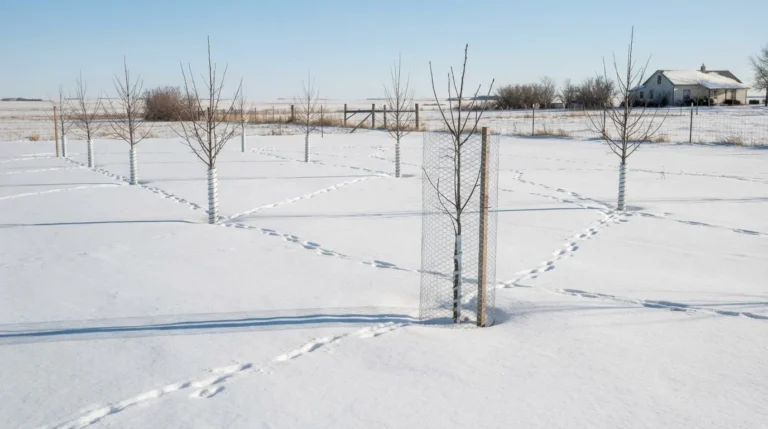
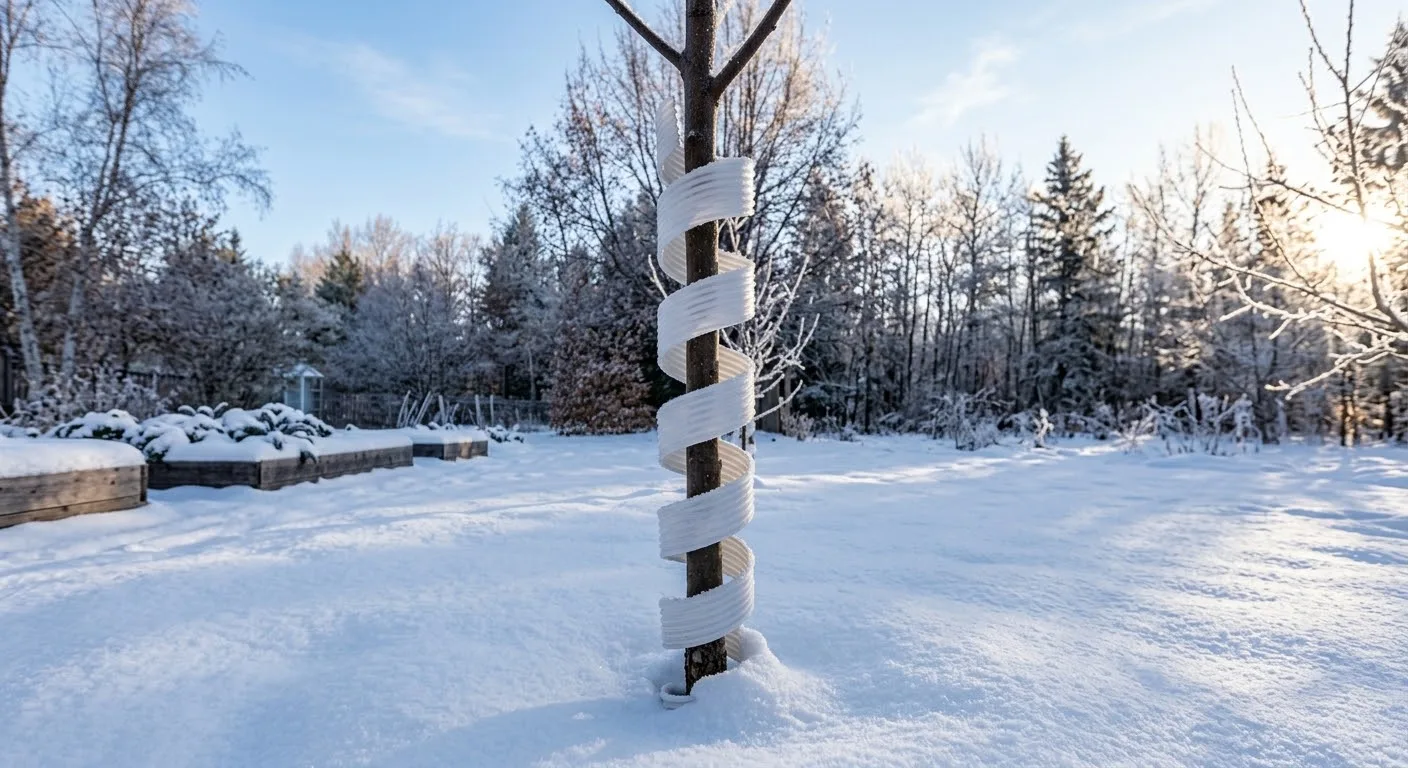
Prevention: install a spiral snow guard around the lower trunk in fall, or paint it with white latex paint diluted with water. Either reflects the sun and keeps bark temperature steadier. Young, thin-barked trees need it most.
Rabbits
Rabbits chew bark and small branches, usually from about 0.5 m above the snow line. As snow piles up, they reach higher. If they chew all the way around the trunk (girdling), the tree can die.
Prevention: spiral guards or wire mesh cylinders tall enough to stay above the deepest snow you expect. Install them before damage starts, not after.
Mice and voles
Mice tunnel under the snow and chew bark at the very base of the trunk, where you cannot see it until spring. Damage is usually low, near the ground.
Prevention: guards that reach down to the soil, and keeping grass, weeds and thick mulch at least a short distance from the trunk so mice have nowhere to hide right against it. USask recommends keeping grass and weeds about 1 m back from young trees.
Late growth that does not harden off
Fertilizer, especially nitrogen, applied in late summer pushes soft new growth that has no time to toughen up before winter, and it dies back. USask advises avoiding late-summer or early-fall nitrogen. If you feed, do it once in early spring, and an annual layer of compost is usually enough.
Dry winter injury
Evergreens and young trees can dry out over winter when the ground is frozen and wind keeps pulling moisture from branches. Water deeply in fall before the ground freezes, especially after a dry summer. Wind screens of burlap help young evergreens in exposed sites.
Snow load and breakage
Heavy, wet snow can split branches. Gently brush snow off young trees after a storm, and prune to strong, wide branch angles while trees are young; narrow forks split more easily.
A fall checklist
- Stop fertilizing by midsummer.
- Water deeply before freeze-up if the fall is dry.
- Install spiral guards or mesh on young trunks, or paint them white.
- Pull grass and mulch back from the base of the trunk.
- In the far north, consider wrapping trees or growing them as multi-stemmed shrubs, as USask suggests.
- Remove spiral guards in spring so they do not trap moisture or constrict growth.
How to check trees in spring
- Look at the south and west side of the trunk for cracked or sunken bark, which points to sunscald.
- Check the base of the trunk under the snow line for chewing by mice and voles.
- Look for clean, angled cuts on twigs above the snow line, a sign of rabbits.
- Scratch a twig with your thumbnail. Green under the bark means it is alive; brown and dry means it died back.
- Wait for leaves. Some branches that look dead in April leaf out in late May.
Repairing winter damage
| Damage | What to do |
|---|---|
| Partial chewing of the bark | Trim ragged edges cleanly with a knife; most trees heal if less than about a quarter of the trunk is damaged |
| Bark chewed all the way around | The tree above is likely to die. Bridge grafting can save valuable trees; otherwise let a strong shoot from below the damage regrow |
| Sunscald cracks | Trim loose bark back to healthy tissue and protect the trunk every winter after |
| Broken branches | Prune back to a healthy bud or branch collar in early spring |
| Dead tips | Prune once you can see where live growth starts |
Avoid wound paint; clean cuts heal on their own.
Choosing hardy trees in the first place
Much winter damage starts with a tree that is not quite hardy enough. On the Prairies and in the northern Plains, choose varieties bred locally and grafted onto hardy rootstock. A variety rated only to zone 4 in a zone 3 garden may survive mild winters and then fail in a hard one. See our guide to the best apple trees for the Prairies for proven choices.
Planning next season? Save this guide to your Pinterest board so it is there when you need it.
Gear that helps
- Spiral tree guards: Protect young trunks from mice, voles and rabbits under the snow.
- Tree trunk wrap: Light-coloured wrap reduces sunscald on thin-barked young trees in late winter.
- Hardware cloth: Wire mesh cylinders around trunks are the most reliable defence against rabbits.
As an Amazon Associate, Short Season Grower earns from qualifying purchases. Links open Amazon search results so you can compare brands, sizes and prices.
Keep reading
Frequently Asked Questions
What is sunscald on trees?
Winter sun heats the bark on the south and west side of a young trunk, which thaws and refreezes and the tissue underneath dies. It shows up as cracked or sunken bark.
How do I stop rabbits eating my fruit trees?
Install spiral guards or wire mesh cylinders in fall, tall enough to stay above the deepest snow you expect.
Should I fertilize fruit trees in the fall?
No. Late nitrogen causes soft growth that is killed over winter. Feed once in early spring, if at all.
When should tree guards be removed?
Remove spiral guards in spring, after the snow melts, so they do not trap moisture or restrict growth.
How do I know if my fruit tree survived winter?
Scratch a twig with your thumbnail: green tissue underneath means it is alive. Wait until late May before removing branches, since some leaf out late.
Can a tree survive if rabbits chewed the bark?
Usually yes if less than about a quarter of the trunk is damaged. If the bark was chewed all the way around, the top is likely to die unless it is saved with a bridge graft.