When to Plant Garlic in Canada (and How to Mulch It for Winter)
Garlic is one of the easiest crops for a cold climate, and one of the few you plant in the fall. Cloves go in the ground before freeze-up, sit under mulch and snow all winter, and come up as soon as the soil thaws. By midsummer you have full-size bulbs, weeks before most of the garden is ready.
The catch is timing. Plant too early and shoots come up before winter; plant too late and the cloves never root. Here is how to get it right in Canada and the northern United States.
The short answer
- Plant from late August to early October, and no later than about three weeks before the ground freezes.
- Late August to early September gives the best survival on the Prairies, according to the University of Saskatchewan.
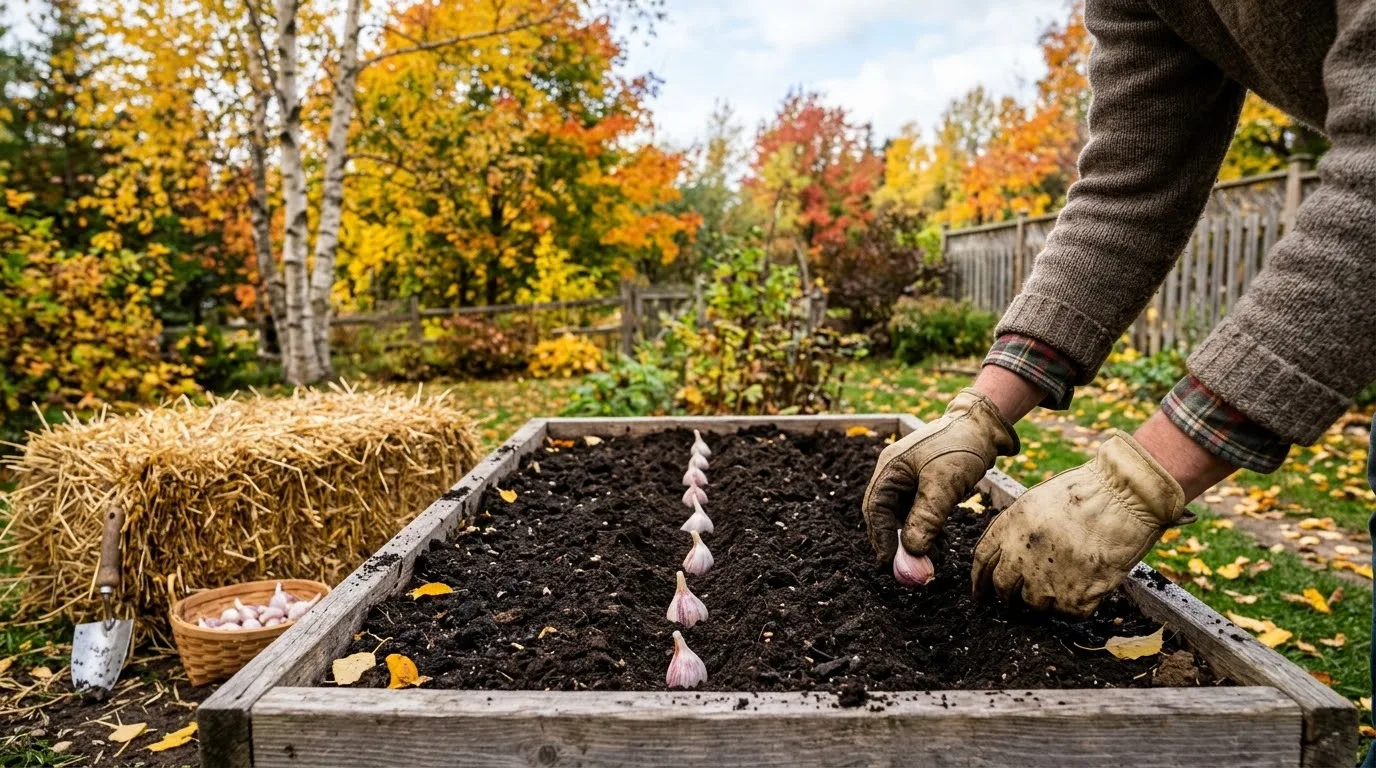
- Set cloves 5 to 10 cm deep, pointed end up, about 7 to 8 cm apart in rows 30 cm apart.
- Cover with at least 10 to 15 cm of straw once the ground starts to freeze.
Why fall planting works better
Garlic needs a long cool period to divide into cloves. Fall-planted cloves root before winter, then use the cold months to develop. Spring planting is possible, but the USask garlic guide notes that spring-planted garlic often gives small, undivided “rounds” and a smaller harvest.
How to time it for your area
The goal is roots, not shoots, before winter. Use your average first fall frost as a guide: the soil keeps working for a few weeks after the first frost before it freezes solid.
- Prairies and northern zones (2 to 3): late August to mid-September.
- Milder zones (4 to 5): mid-September to early October.
- Warm spell in the forecast? Wait a week. Cloves planted into warm soil can sprout above ground and get damaged.
If you are not sure of your zone, see our guide to growing zones in Canada.
Choosing garlic to plant
Buy seed garlic from a local grower or garden centre. Grocery store garlic may carry disease, may not suit a cold climate and is sometimes treated to stop sprouting.
| Type | What to expect |
|---|---|
| Hardneck | Hardier on the Prairies. Stiff central stem, fewer but larger cloves, produces edible scapes. Stores a little less long. |
| Softneck | Soft stems you can braid, many smaller cloves, longer storage. |
| Elephant garlic | Not true garlic. Four or five huge, mild cloves. Less cold hardy and needs extra protection. |
Hardneck varieties that did well in USask trials include German Red, Russian Red, Music, Czech and Stiffneck. Softneck options include WCS Silverskin and Cedar.
How to plant garlic
- Choose a sunny, well-drained bed. Garlic rots in soggy soil.
- Break the bulb into cloves just before planting. Keep the largest healthy cloves; discard any that are damaged or show blue mould.
- Plant each clove 5 to 10 cm deep with the pointed end up.
- Space cloves 7 to 8 cm apart in rows about 30 cm apart.
- Water the bed once if the soil is dry.
Mulch for winter
Once the soil starts to freeze, cover the bed with straw. USask recommends at least 10 to 15 cm; leaning toward the deeper end is wise in the coldest areas. A deep layer of snow does the same job, but you cannot count on snow arriving before the hard cold. Mulch keeps the soil from freezing and thawing repeatedly, which can heave cloves out of the ground.
In spring, pull most of the mulch back as shoots appear, leaving a thin layer around the plants to hold moisture and block weeds.
From spring to harvest
- Water about 2.5 cm a week while plants grow, then reduce and stop as the bulbs mature.
- Snap off scapes on hardneck garlic in midsummer, while they are young. Leaving them on reduces bulb size, and they are delicious sauteed.
- Harvest when the lower third of the leaves has turned yellow and died back, usually mid to late July.
If you missed the fall window
You can plant in early spring as soon as the frost is out of the ground, about two to three weeks before your average last frost. Expect smaller bulbs, but it is still worth doing, and you can save the best bulbs to plant properly next fall.
Gear that helps
- Seed garlic for planting: Hardneck types handle cold winters best. Buy from a supplier, not the grocery store.
- Straw mulch: A loose layer insulates overwintering crops and keeps soil moist in summer.
- Soil thermometer: Soil temperature, not the calendar, tells you when seeds will actually sprout.
As an Amazon Associate, Short Season Grower earns from qualifying purchases. Links open Amazon search results so you can compare brands, sizes and prices.
Keep reading
Frequently Asked Questions
When should I plant garlic in Canada?
From late August to early October, and at least about three weeks before the ground freezes. On the Prairies, late August to early September gives the best survival.
How deep do you plant garlic?
Plant cloves 5 to 10 cm deep with the pointed end up, about 7 to 8 cm apart in rows 30 cm apart.
Do I need to mulch garlic?
Yes, in cold climates. Cover the bed with at least 10 to 15 cm of straw once the soil starts to freeze, and pull most of it back in spring.
Can I plant garlic from the grocery store?
It is not recommended. Store garlic may carry disease, may not be hardy, and is sometimes treated to prevent sprouting. Buy seed garlic from a local grower.
Can I plant garlic in spring?
Yes, as soon as the frost is out of the ground, but spring-planted garlic usually gives smaller, often undivided bulbs.